THE RUIN INDEX · AYASULUK · SELÇUK
Selçuk and the hill of Ayasuluk
The small town next to Ephesus has its own layers: a vast 6th-century basilica over the tomb of St John, a castle, one of the finest early Turkish mosques and the single column left of a Wonder of the World.
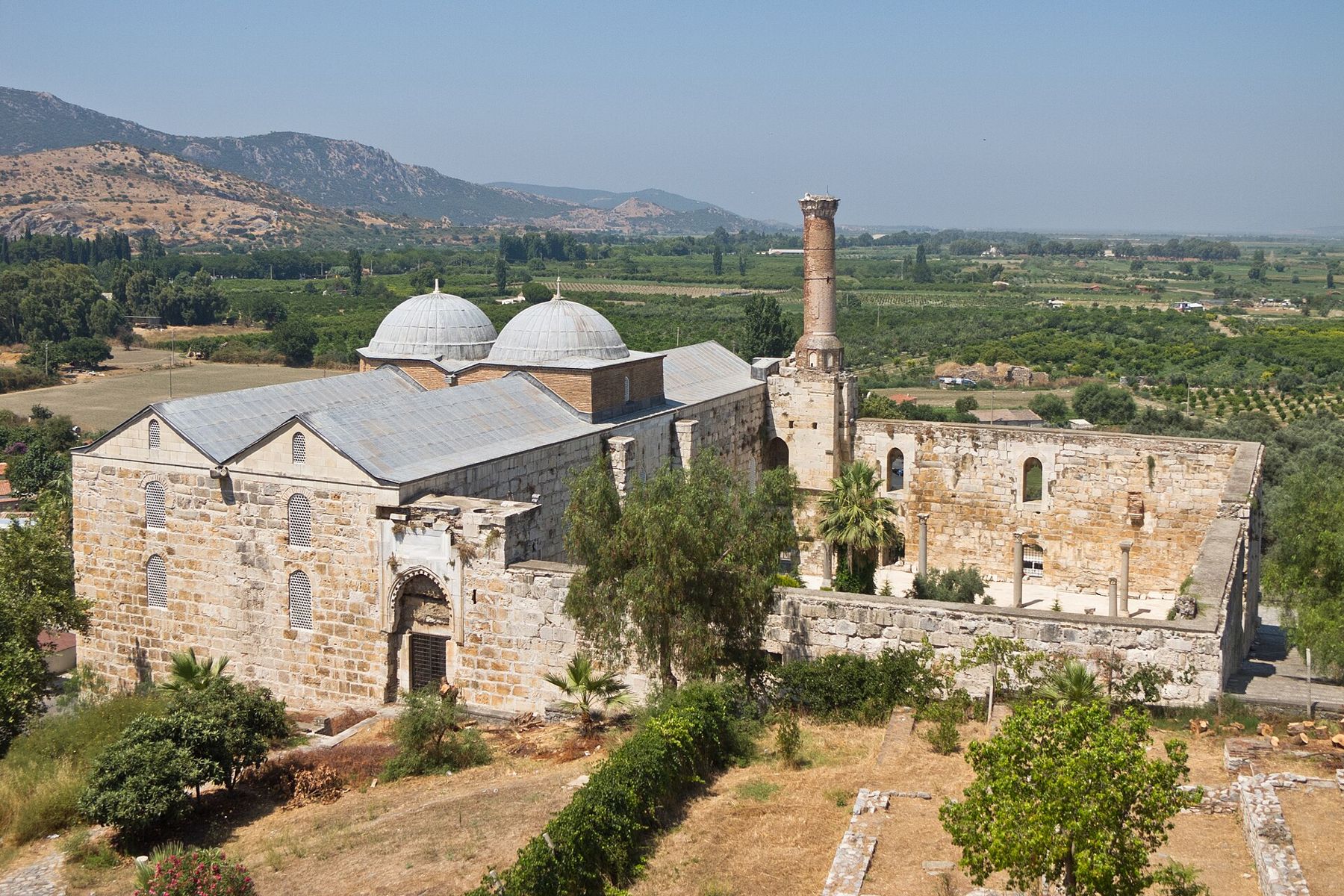
Most people know Selçuk as the town next to Ephesus, the place to sleep before an early start at the ruins. It deserves more. As Ephesus declined and its harbour silted up, life moved to the hill of Ayasuluk, where Selçuk now stands, and the town gathered monuments of its own: a great Byzantine basilica, a hilltop fortress, a 14th-century mosque and, in a marshy field at its edge, the last standing column of the Temple of Artemis. All of it can be seen on foot in a day.
The Basilica of St John
A tradition going back to early Christian times holds that John the Apostle spent his last years in Ephesus and was buried on the hill of Ayasuluk. A small church stood over the grave at first. In the 6th century, the emperor Justinian replaced it with a huge basilica, cross-shaped and roofed with six domes, one of the largest churches of its time. The site of the tomb lay beneath the central dome.
The basilica was ruined by earthquakes and later stripped for building stone, but enough has been restored to give a sense of its size. Re-erected columns and arcades of brick and stone outline the nave, marble floors survive in places, and a small baptistery stands to one side. The view from the terrace takes in the whole valley, the mosque below and the plain toward the sea.
Pilgrims came to the tomb for centuries, and the church was one of the great destinations of the Byzantine world. A visit by Pope Paul VI in 1967 and later papal visits renewed its fame among Christian travellers. Whatever you make of the tradition, the scale of the building is a powerful reminder of how important Ephesus remained as a Christian city long after its harbour began to fail.
The fortress on the hill
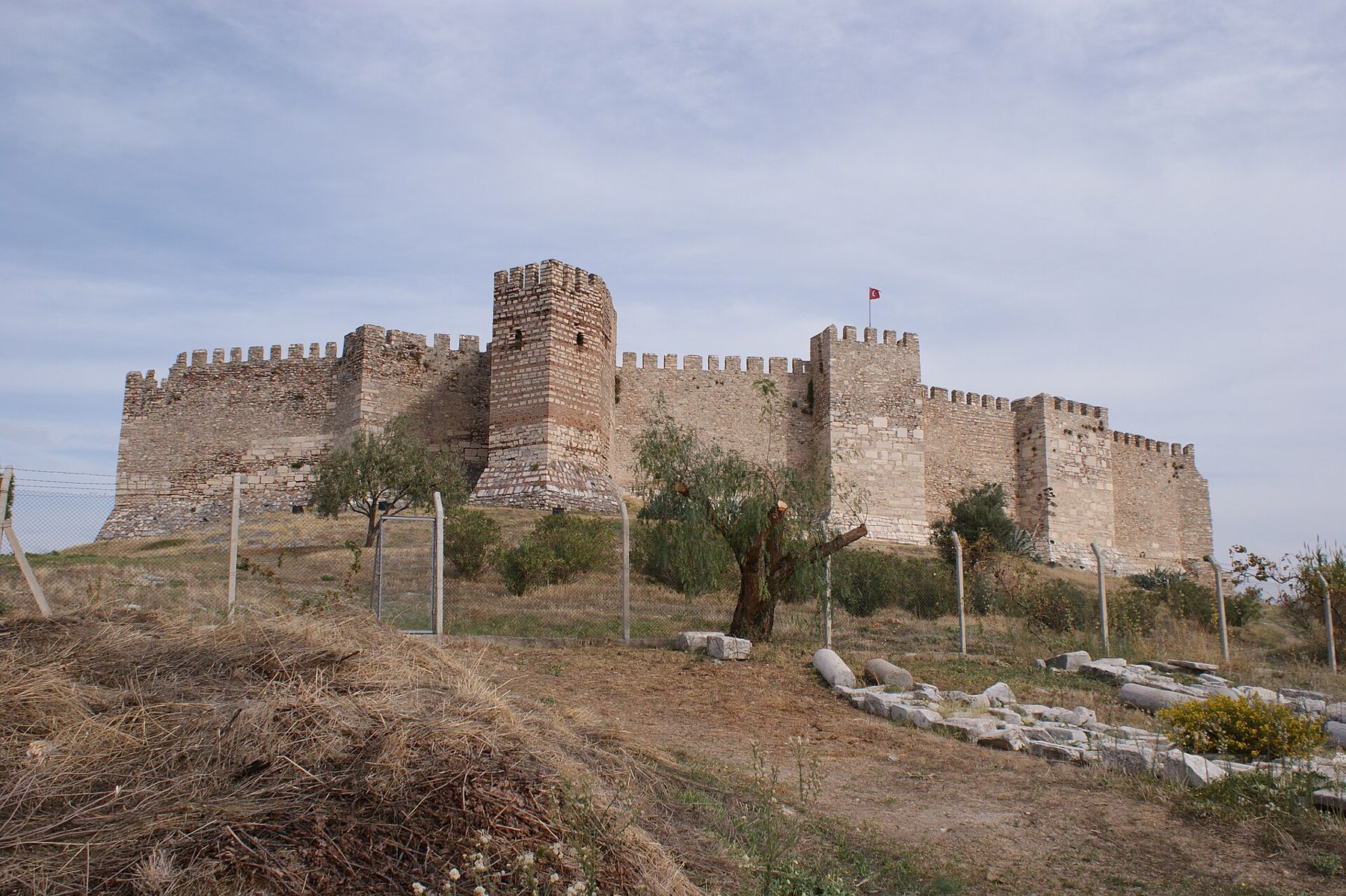
Above the basilica, the walls of the Ayasuluk fortress crown the hill. Its defences were built and rebuilt by the Byzantines, the Seljuks, the Aydınid emirs and the Ottomans, and excavations inside have uncovered houses and a small mosque. Access has varied over the years, sometimes included with the basilica and sometimes closed for work.
2ND C. ADALSO ON THE INDEXEphesus from the top gate down
The İsa Bey Mosque
At the foot of the hill stands the İsa Bey Mosque, built in the 1370s for İsa Bey, ruler of the Aydınid emirate, one of the Turkish states that held this coast before the Ottomans. Its architect, named in an inscription as Ali, son of Mushimish of Damascus, used reused Roman and Byzantine columns from Ephesus to support the prayer hall and created a courtyard plan that looks forward to later Ottoman mosques. The tall west front, faced with marble and carved with inscriptions, is one of the finest pieces of early Turkish architecture in Anatolia.
It is a working mosque. Visit outside prayer times, dress modestly, and take your shoes off before entering the prayer hall. Women should cover their hair; scarves are often available at the door.
One column of a Wonder
Between the town and the road to Ephesus, a single column rises from a hollow often filled with water and reeds. It is all that stands of the Artemision, the Temple of Artemis, counted among the Seven Wonders of the ancient world. The temple was rebuilt several times; one version was burned in 356 BC by a man named Herostratus, who wanted to be remembered, and the later marble temple that replaced it was one of the largest buildings the Greeks ever made. Its stone was later carried off to build the basilica, the mosque and buildings as far away as Constantinople.
The column was re-erected from fragments, and storks often nest on top of it. Standing beside it, it is hard to imagine what was there, which is exactly why it is worth the short walk.
The museum and the town
The Ephesus Museum in the centre of Selçuk holds many of the best finds from Ephesus, including two famous statues of Artemis covered in rounded ornaments, portraits, frescoes and objects from the Terrace Houses. Visiting it after the site helps everything fall into place.
The town itself is small and easy-going, with Roman aqueduct arches along one of its main streets, often topped with stork nests in spring and summer. A large weekly market fills the streets near the bus station with fruit, vegetables, cheese, olives and household goods.
Selçuk also makes a good starting point for walks. A quiet road leads past the lone column toward the lower gate of Ephesus, and another climbs into the hills toward Şirince. Early morning, before the traffic and the heat, is the time to try them.
Using Selçuk as a base
Selçuk has a station on the line from Izmir and a bus station with connections along the coast and inland. From here, minibuses run to the lower gate of Ephesus, up the valley to Şirince, and to Kuşadası on the coast. It is quieter than Kuşadası in the evenings and a good place to stay if you want to be at the ruins at opening time, with small family-run guesthouses on the streets behind the aqueduct. Opening hours for the basilica, the mosque visits and the museum change with the season.