THE RUIN INDEX · EPHESUS · SELÇUK
Ephesus from the top gate down
Start at the upper gate and the whole city runs downhill: a marble street lined with fountains and temples, the covered Terrace Houses, the Library of Celsus and a theatre for twenty-four thousand.
Ephesus was one of the great cities of the Roman east, capital of the province of Asia and a port of world importance. Its Temple of Artemis was one of the Seven Wonders, and its streets, houses and public buildings have been excavated more fully than almost anywhere else in the region. The ruins lie just outside the town of Selçuk, and since 2015 Ephesus has been a UNESCO World Heritage Site. It is also the busiest ancient site in Turkey, so how you walk it, and when, matters.
A port that moved, a city that followed
Ephesus moved more than once. An early Ionian town stood near the Temple of Artemis; around 290 BC, the general Lysimachus refounded the city in the valley between the two hills where the ruins stand today. Under Rome it became the capital of the province of Asia and one of the largest cities of the empire. Paul spent more than two years here, and a church council met in 431 in the Church of Mary near the harbour. All the while, the Küçük Menderes river pushed the coastline west, and despite repeated dredging the harbour silted up. By the Middle Ages, life had shifted to the hill of Ayasuluk at Selçuk.
Why to start at the top
The city lies in a valley between two hills, and its main street runs downhill from the upper gate in the southeast to the harbour road in the northwest. Most tour buses unload at the upper gate and collect at the lower one, and that is the right idea: you walk downhill all the way, ending at the library and the theatre. Taking a taxi from Selçuk to the upper gate and walking out at the lower gate is easy, and the lower gate is closest to the road back to town.
The upper city
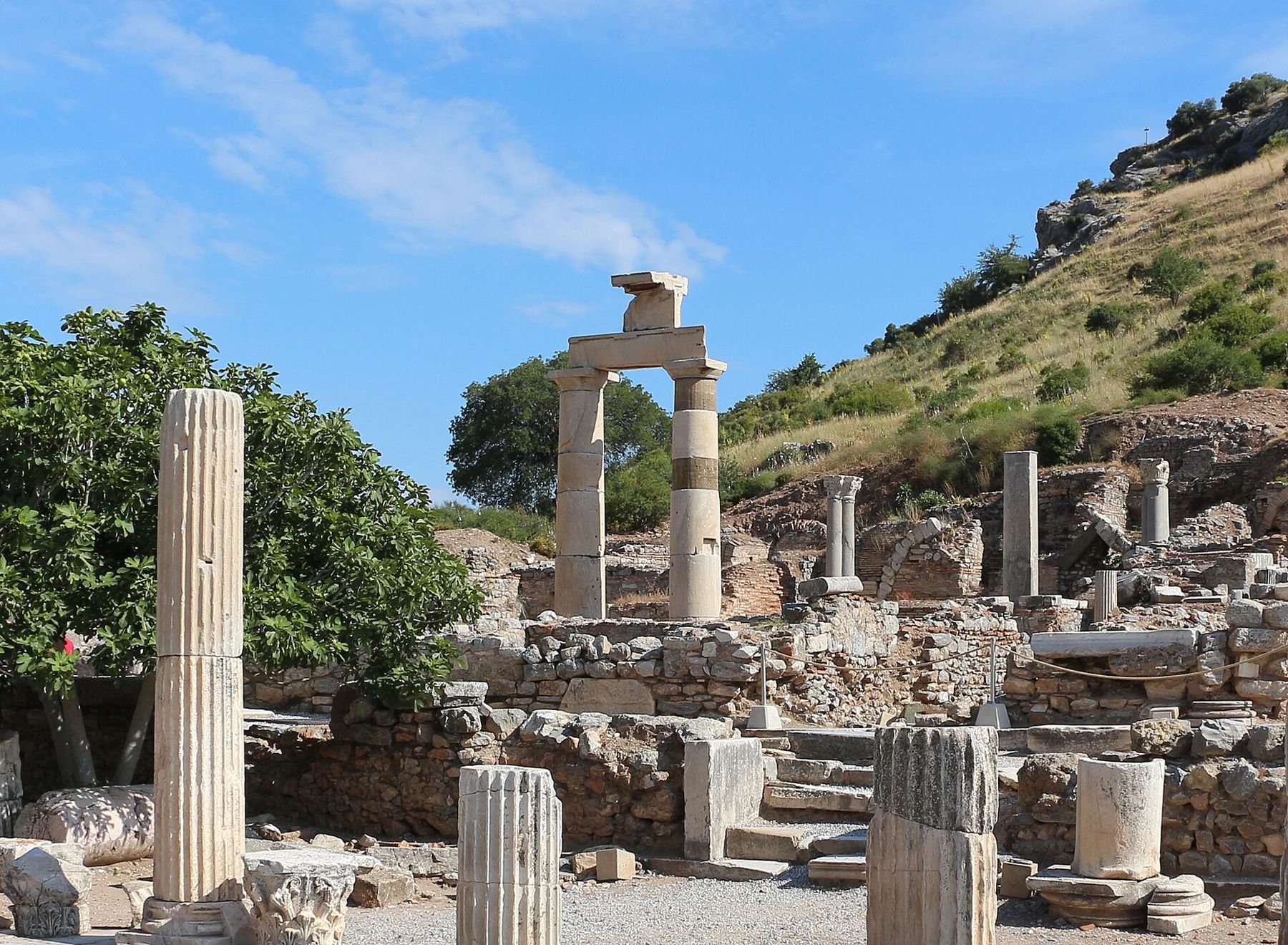
Inside the upper gate, the State Agora and the civic buildings take up the first stretch. The small Odeon, a roofed council chamber, is well restored. Just beyond it, the Prytaneion held the city's sacred flame, and its columns still stand. From here the street becomes Curetes Street, paved with marble and sloping down toward the library, lined with fountains, statue bases and the small, graceful Temple of Hadrian, with a relief of a woman's head in its arch.
The Terrace Houses
Halfway down Curetes Street, a modern roof covers the Terrace Houses, the homes of wealthy Ephesians built on the hillside. Inside, walkways lead over rooms with wall paintings, marble panelling and mosaic floors, and you can watch archaeologists piecing together thousands of marble fragments. It costs extra, and many people skip it. Do not skip it. It is the best chance anywhere on the coast to see how rich Romans actually lived, and it is shaded.
It is the best chance anywhere on the coast to see how rich Romans actually lived, and it is shaded.
6TH C. ADALSO ON THE INDEXSelçuk and the hill of Ayasuluk
The Library of Celsus
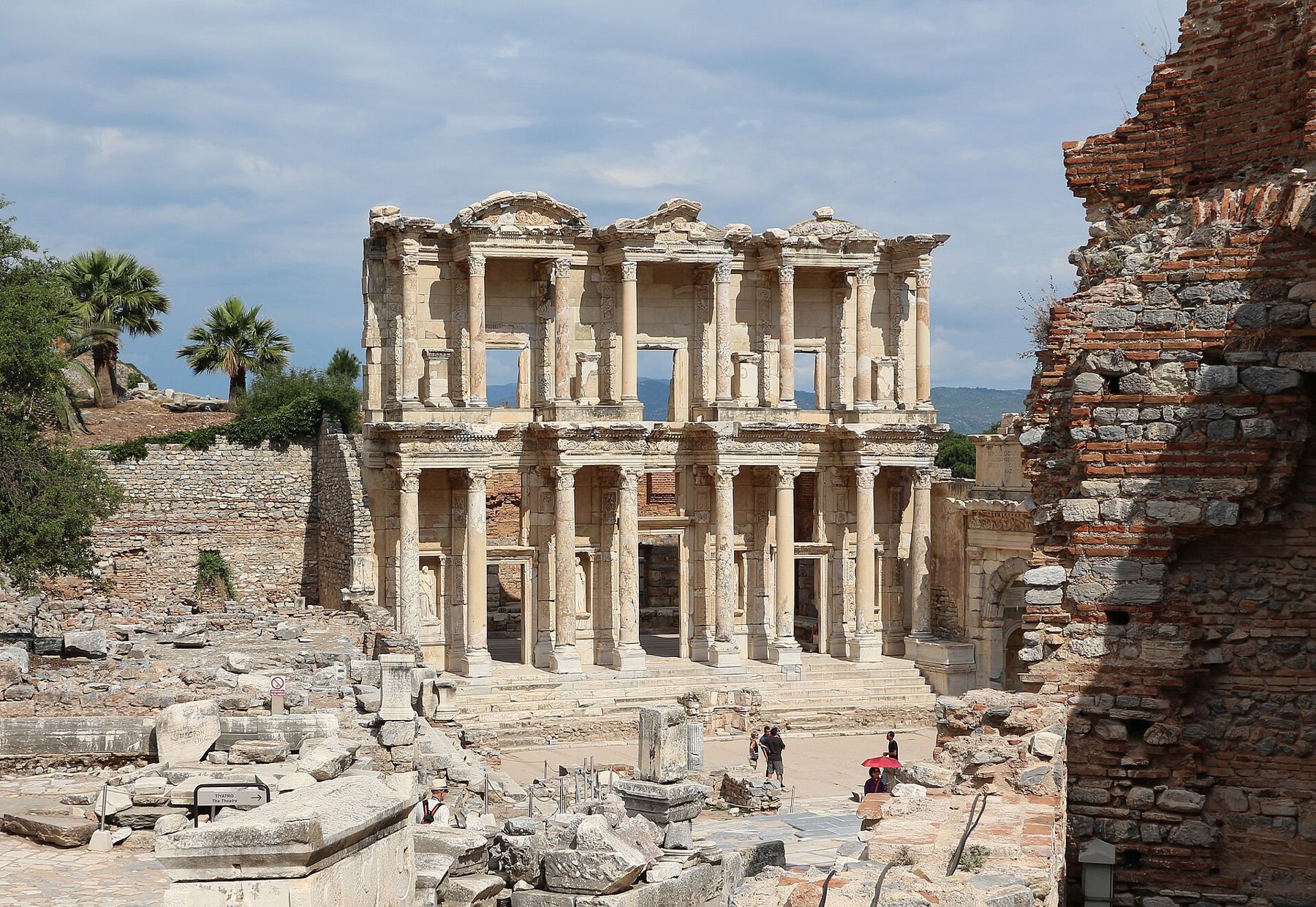
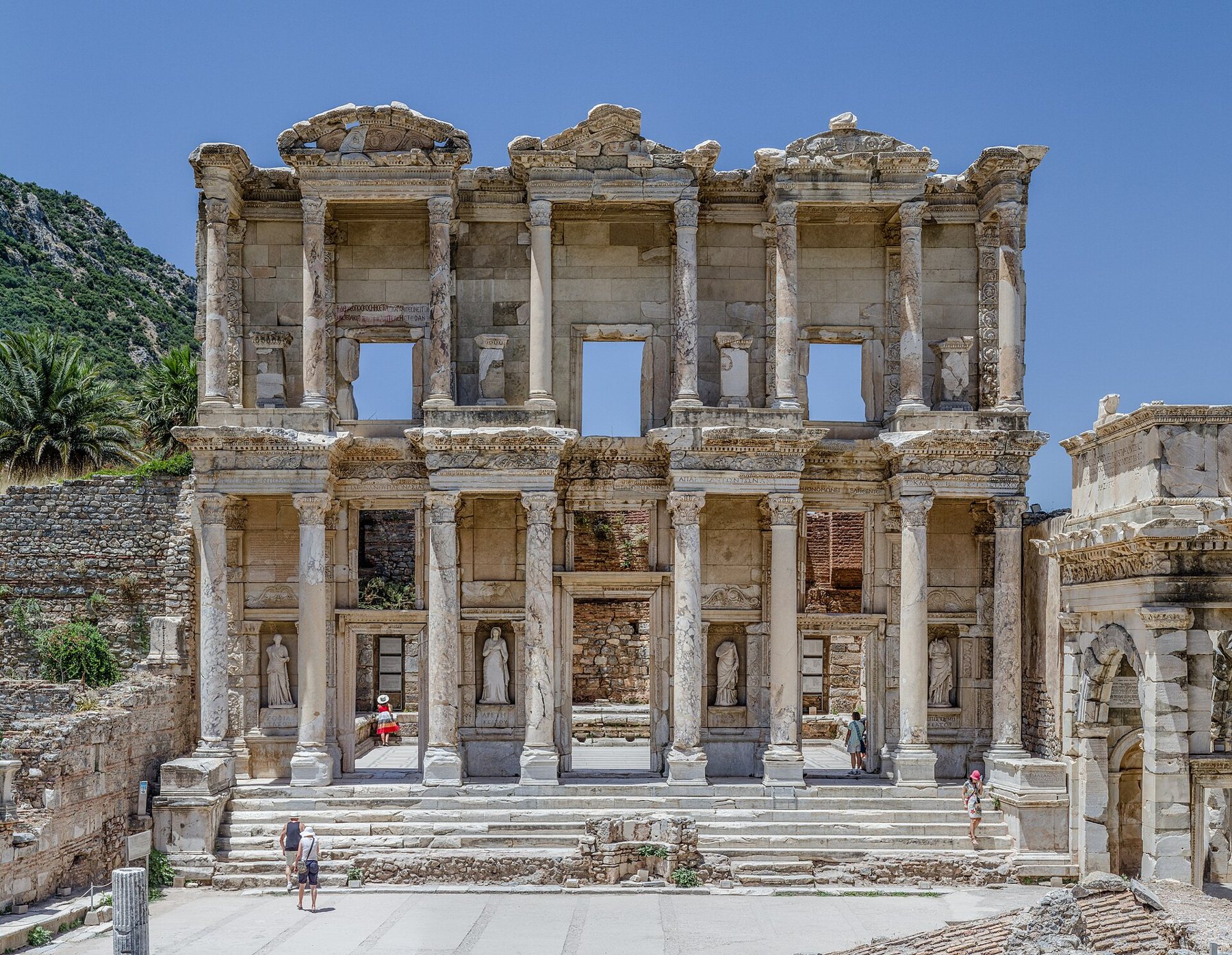
At the bottom of Curetes Street, the facade of the Library of Celsus rises two storeys high. It was built in the early 2nd century AD by Gaius Julius Aquila as a memorial to his father, Tiberius Julius Celsus Polemaeanus, a governor of Asia, who was buried in a tomb beneath it. The library once held thousands of scrolls. What you see is a careful reconstruction of the original facade from its fallen pieces in the 1970s; the statues in its niches are copies of originals now in Vienna.
Beside the library, the Gate of Mazaeus and Mithridates, built by two freed slaves in honour of Augustus, leads into the great commercial agora. Just up the street, the public latrines and the Scholastica Baths are worth a quick look for a glimpse of everyday life.
The library is the most photographed spot in Ephesus. In the middle of the day, the square in front of it is packed. Early morning, with the sun behind you, is far better.
Marble Street and the theatre
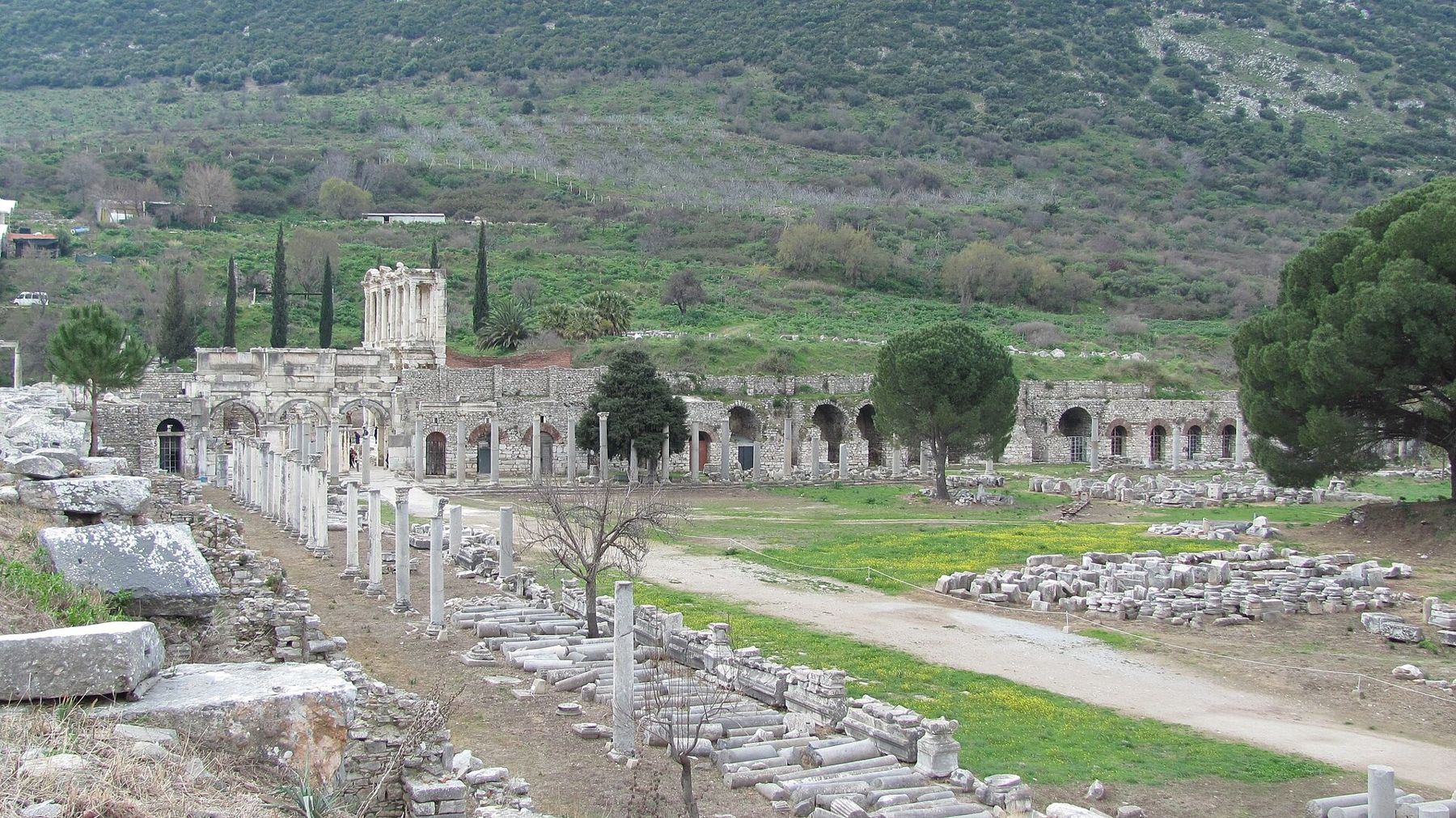
From the library, Marble Street leads north to the great theatre, cut into the slope of Mount Panayır. It held around twenty-four thousand people and is famous as the scene of a riot described in the Acts of the Apostles, when silversmiths who made images of Artemis protested against Paul's preaching. Climb to the upper rows for the view down the Harbour Street, a long colonnaded avenue that once led to the sea. The coast has since retreated several kilometres, and the old harbour is now marsh and farmland.
Heat, crowds and cruise ships
Ephesus has little shade, and its marble reflects the sun. In July and August, midday temperatures make a long visit hard going. Cruise ships dock at Kuşadası and send their passengers here in the morning, so on cruise days the mid-morning crowd can be thick. The best times are opening time and the last two hours before closing. Spring and autumn are ideal; winter is quiet, often clear and occasionally wet.
Away from the main street, paths lead up the slopes on either side. The lower slopes of Mount Panayır hide the stadium and the Vedius Gymnasium near the lower gate, and the ruined Church of Mary, where the council of 431 met, lies off the Harbour Street. These corners see a fraction of the visitors and give a better sense of the city's real size.
If the heat and crowds are wearing, do the visit in two parts: the upper city and the Terrace Houses early, a long lunch in Selçuk, and the library and theatre in the last hours of the day, when the light turns gold on the facade.
A few kilometres from the lower gate, the House of the Virgin Mary on the slopes of Bülbül Dağı is a place of pilgrimage for Christians and Muslims alike, honouring a tradition that Mary spent her last years near Ephesus. It is reached by road, best by taxi, and keeps its own hours.
Take more water than seems sensible. There are toilets and kiosks near both gates, but almost nothing in between.
The Ephesus Museum in Selçuk holds statues, portraits and the two famous statues of Artemis with their many rounded ornaments, and makes a good afternoon after the site. The lone column of the Temple of Artemis stands in a field between the town and the ruins.
Selçuk is the closest base and has a station on the Izmir line. Kuşadası, on the coast, is a larger resort with frequent minibuses to Selçuk. Either makes a good start for an early morning at the upper gate.