THE RUIN INDEX · APHRODISIAS · GEYRE
Aphrodisias, the city of sculptors
A marble city in a green upland valley, famous in Roman times for its sculptors. It has one of the best-preserved stadiums of the ancient world and a museum full of faces carved from local stone.
Aphrodisias lies in a high valley near the village of Geyre, in the Karacasu district of Aydın province, about two and a half hours from the coast. It was the city of Aphrodite, and under the Roman emperors it grew rich and famous for one thing above all: sculpture. Quarries of fine white and grey marble lay just outside the city, and its workshops sent statues and carvers across the Mediterranean. The site was added to the World Heritage list in 2017, yet it remains far quieter than Ephesus.
A city that favoured Rome
Aphrodisias backed the right side in the civil wars of the 1st century BC, and Octavian, later Augustus, rewarded it with privileges, including freedom from certain taxes. The city spent its wealth on marble buildings. Much of what you see dates from the 1st and 2nd centuries AD, and many statues were found where they fell, which is why the museum is so rich.
Modern excavation began in earnest in 1961 under Kenan Erim, who worked here for three decades and is buried near the Tetrapylon. Teams from New York University have continued the work since.
Marble and the men who carved it
The quarries a couple of kilometres from the city produced marble in several shades, from pure white to blue-grey, and the city's sculptors became famous for working it. Statues signed by artists from Aphrodisias have been found in Rome and elsewhere in Italy, and a sculptors' workshop excavated here contained unfinished pieces and practice works. Walking around the site, look at how much decoration survives on doorframes, column bases and friezes. The carvers did not save their best work for statues.
The city declined in late antiquity, after earthquakes and changing fortunes. In the Byzantine period it was renamed Stauropolis, the city of the cross, and a defensive wall of the 4th century was built around it from reused blocks, some still carrying inscriptions. The modern village of Geyre once stood among the ruins; it was moved to its present site in the 1960s so excavation could go ahead.
The Tetrapylon and the Temple of Aphrodite
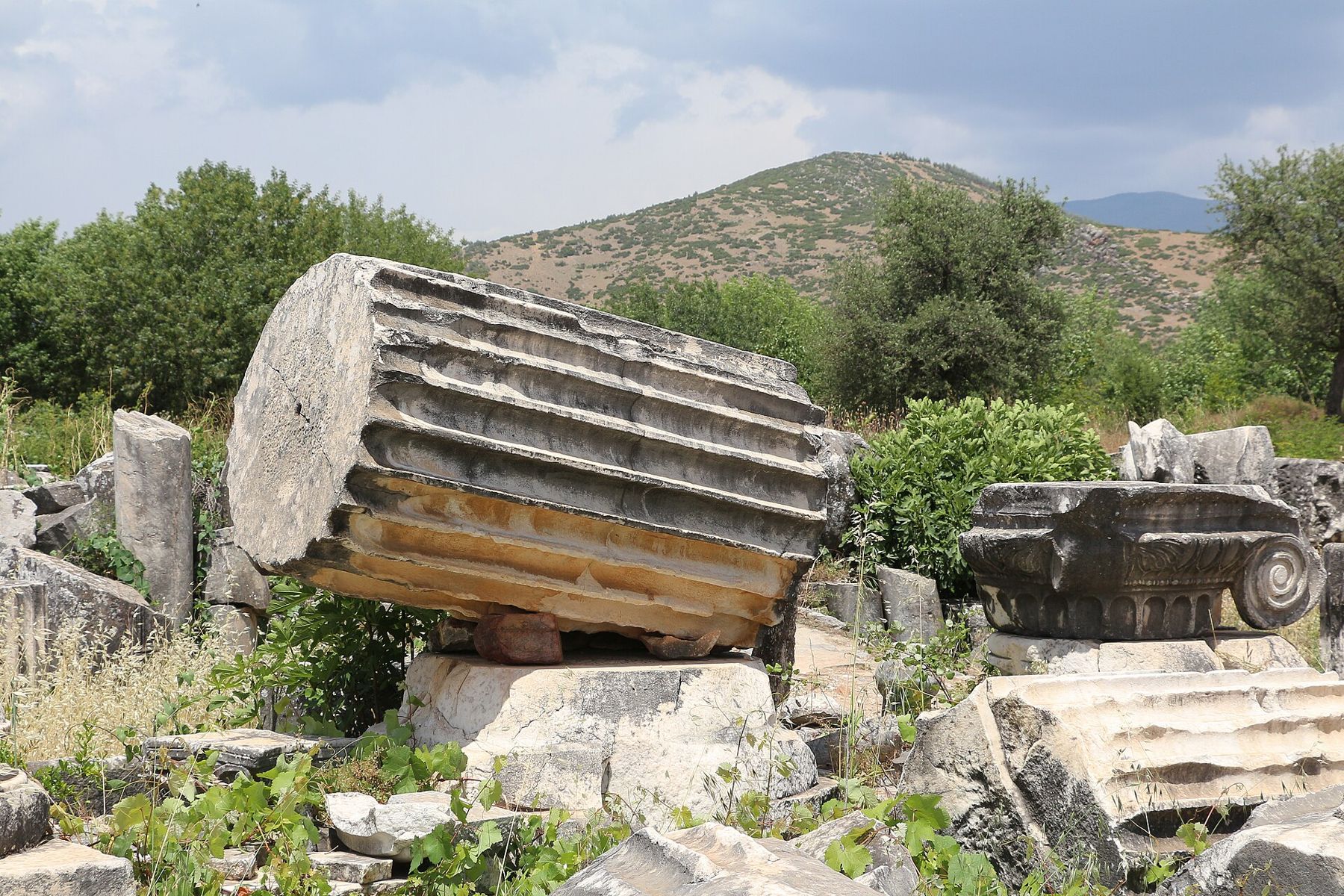
The Tetrapylon, a monumental gateway of four rows of columns from around AD 200, marked the approach to the sanctuary of Aphrodite. It was reassembled from its fallen pieces in the late 1980s and is the image most people carry away. Its spiral-fluted columns and carved pediments show off the local workshops at their best.
The Temple of Aphrodite itself was converted into a church in late antiquity, which changed its plan, and only some columns stand. The site of the cult goes back far earlier than the temple, though how far is still debated.
The stadium
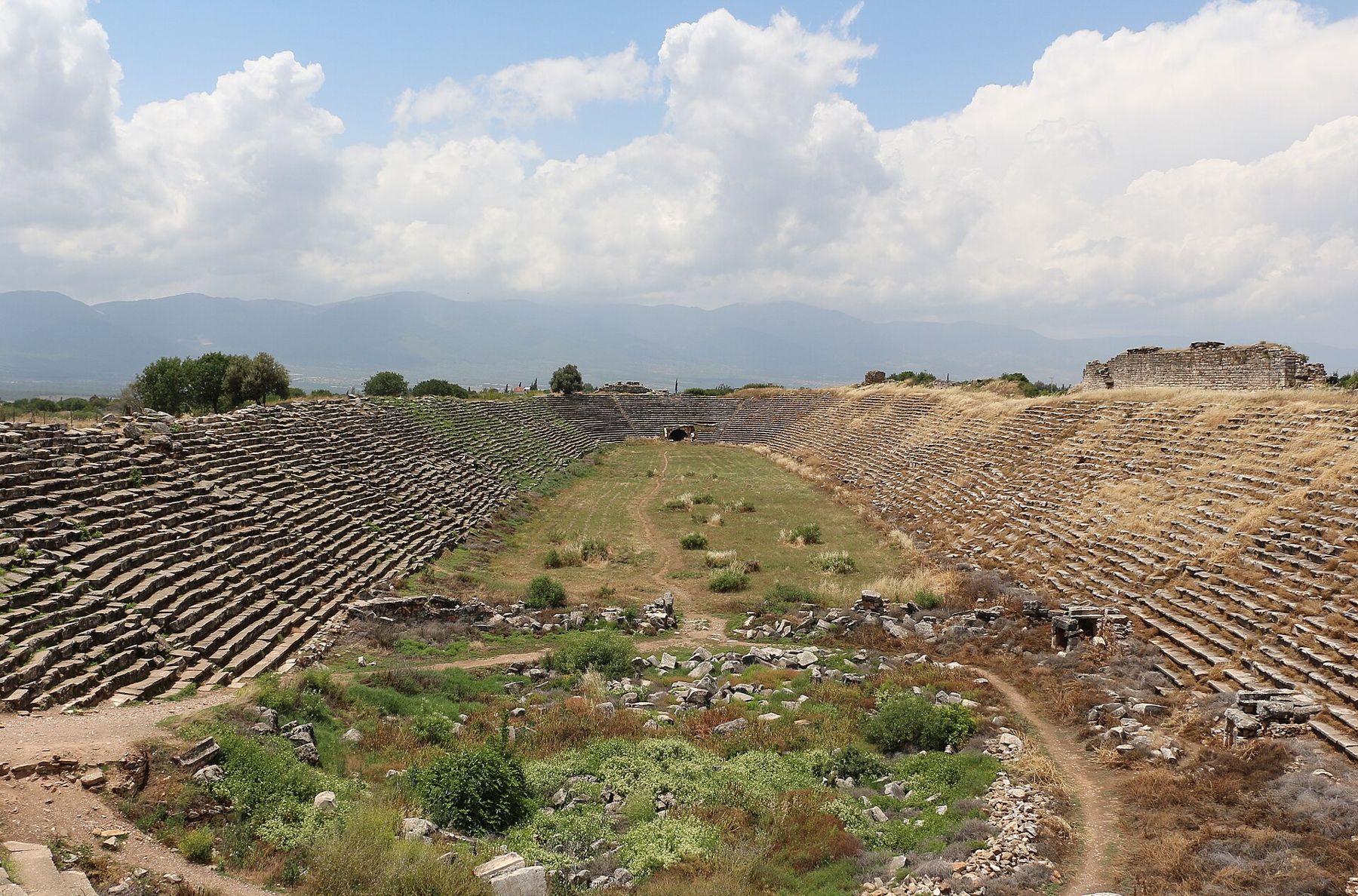
A path leads north from the temple to the stadium, one of the best preserved anywhere in the ancient world. It is about 270 metres long, with rows of seats rising on all sides and room for around thirty thousand spectators. Athletics and festivals were held here; later, one end was walled off to make an arena for spectacles. Climb up the seats and walk along the top to take in the whole oval. It is often almost empty.
Climb up the seats and walk along the top to take in the whole oval.
2ND C. ADALSO ON THE INDEXEphesus from the top gate down
The Sebasteion and its reliefs
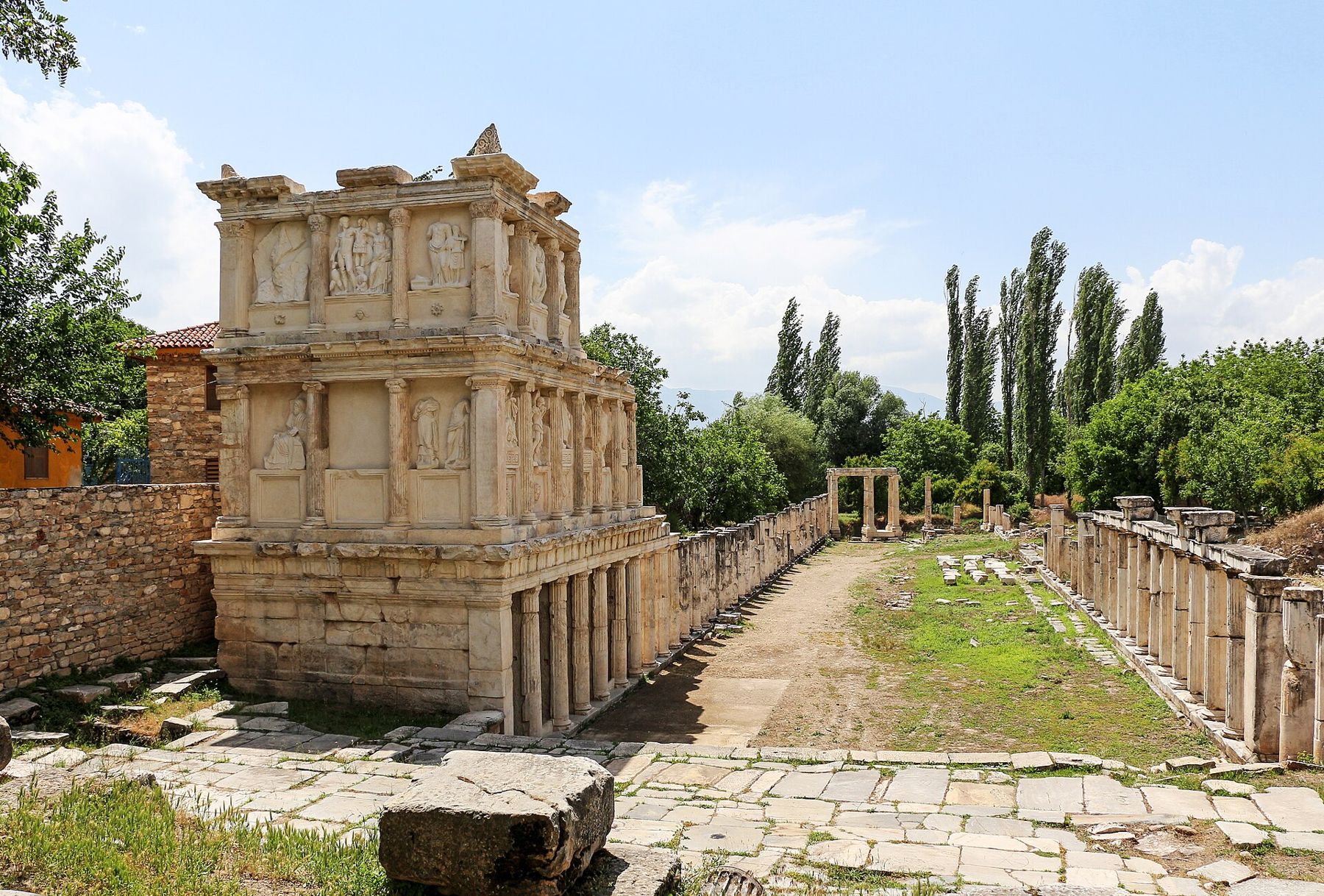
The subjects of the panels range from Augustus and Claudius shown as conquering heroes to scenes from Greek myth, such as Achilles and Penthesilea, and personifications of the peoples ruled by Rome. Together they amount to a manifesto of how a provincial city wanted to present its loyalty to the emperors, carved by its own sculptors.
The Sebasteion was a temple complex of the 1st century AD dedicated to Aphrodite and the Julio-Claudian emperors. A long processional court was lined on both sides by three-storey porticoes decorated with about two hundred carved relief panels showing emperors, gods, myths and the peoples of the empire. Part of the facade has been re-erected on site, and most of the surviving panels are displayed in a dedicated hall of the museum. Seeing the reliefs at eye level, in order, is one of the highlights of a trip to the Aegean side.
Theatre, council house and baths
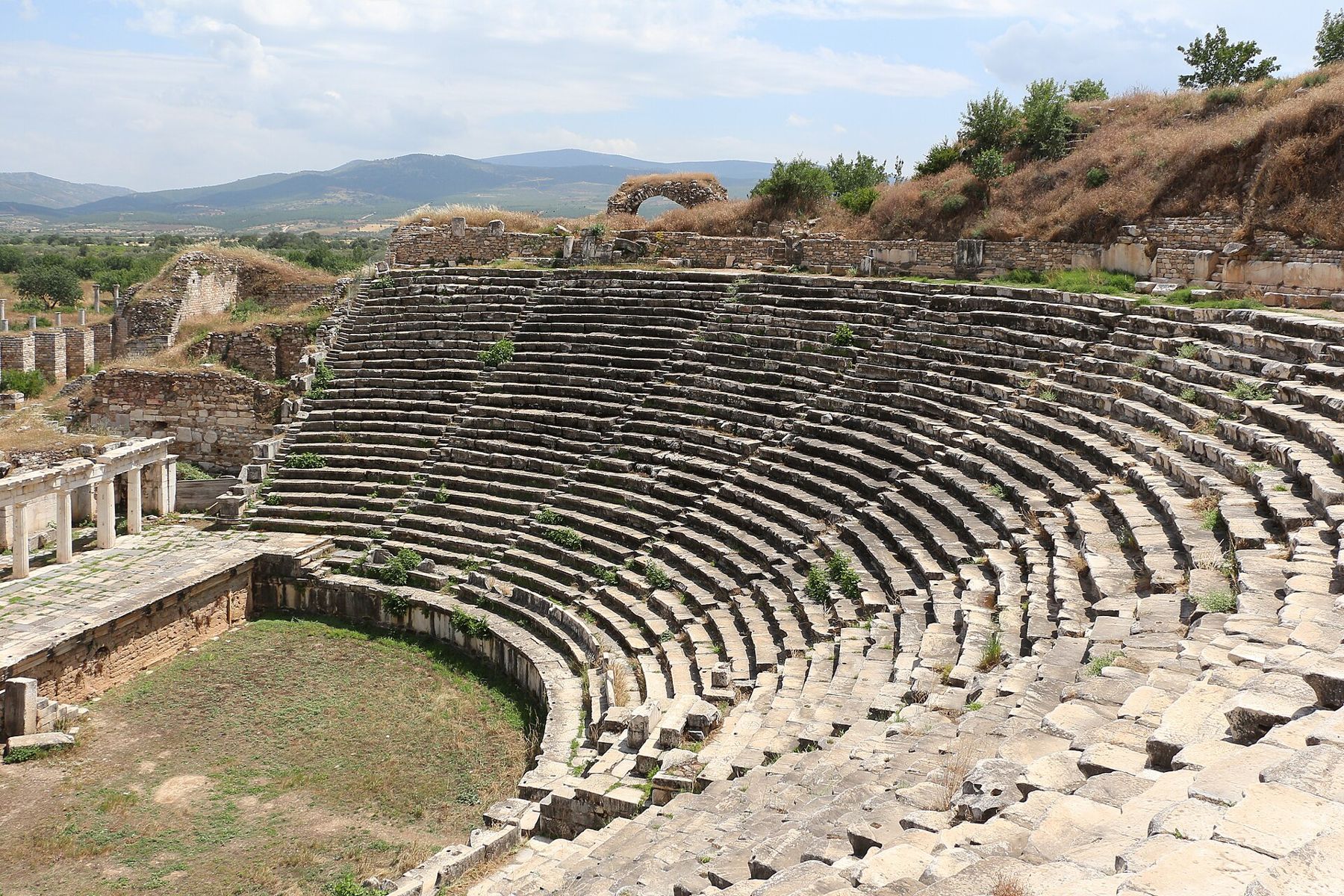
Beyond the Sebasteion, the theatre is cut into the side of a prehistoric mound and was later linked with the city's defences. Near it is the bouleuterion, the council house, with its curved rows of seats in good condition, and the Hadrianic baths. A wide pool in the city centre, once surrounded by porticoes, has been cleared and reflects the columns on still days.
Aphrodisias also had its own school of philosophy in late antiquity and a famous local family of benefactors. One of them, a freed slave of Octavian named Gaius Julius Zoilos, paid for buildings including the theatre's stage, and a frieze from his tomb in the museum shows him being crowned by personifications of the city and the people.
The museum beside the entrance is one of the best small archaeological collections in Turkey. Its portrait statues of local officials and benefactors show the skill of the city's carvers, with lifelike faces and carefully rendered robes. Allow at least an hour for it alongside the Sebasteion hall.
Reaching Geyre
Aphrodisias is the hardest site in this guide to reach by public transport. Buses run from Izmir and the coast to Nazilli, and minibuses go on from Nazilli to Karacasu. From Karacasu, the last stretch to Geyre is about thirteen kilometres by taxi or by an occasional local dolmuş. With a car it is a straightforward drive, and it combines well with Pamukkale and Hierapolis, about an hour and a half to the east.
Spend a moment at the bouleuterion, the council house, where the semicircle of seats is so well kept that you can imagine the city's councillors arguing below. Inscriptions found on site record the names of donors, athletes and officials, and the city's archive of inscriptions is one of the richest from Roman Asia Minor, which is why scholars can say so much about the people who lived here.
Walk the site as a loop: Tetrapylon and temple first, then out to the stadium, back through the city centre past the pool, the council house and the baths, and finish with the theatre, the Sebasteion and the museum. The route is roughly two to three kilometres on paths and grass, with little shade. Spring brings wild flowers across the stadium floor, and the mountains behind the valley often keep a cap of snow into April.
A tractor-drawn shuttle has at times carried visitors from the car park to the entrance. The upland air is a little cooler than the coast, but the ruins are exposed, so carry water and a hat.