THE RUIN INDEX · PERGAMON · BERGAMA
Pergamon's acropolis and its steep theatre
A royal city on a ridge above Bergama, with a theatre that seems to pour down the hillside, a rebuilt Roman temple, a healing sanctuary on the plain and a vast brick temple in the middle of town.
Pergamon was the capital of the Attalid kings, who ruled much of western Asia Minor from the early 3rd century BC until 133 BC, when the last of them left his kingdom to Rome. They turned a fortified hill above the Caicus valley into one of the showpieces of the Hellenistic world, with palaces, a library, temples and a theatre built into the slope. Below it, the modern town of Bergama grew around later Roman buildings. The whole landscape has been on the UNESCO World Heritage list since 2014.
Pergamon is really three sites: the acropolis on the ridge, the Asklepieion on the plain to the southwest, and the Red Basilica in the town centre. Seeing all three properly takes a day.
Up to the acropolis
A cable car climbs from the lower town to the top of the acropolis in a few minutes, saving a long, hot walk up the road. From the upper station, the path leads past the ruined royal palaces and the remains of the library, which was said to rival Alexandria's. Ancient writers told a story that parchment, pergamena, was developed here when Egypt stopped exporting papyrus. It is a good story, best taken as a tradition rather than a proven fact.
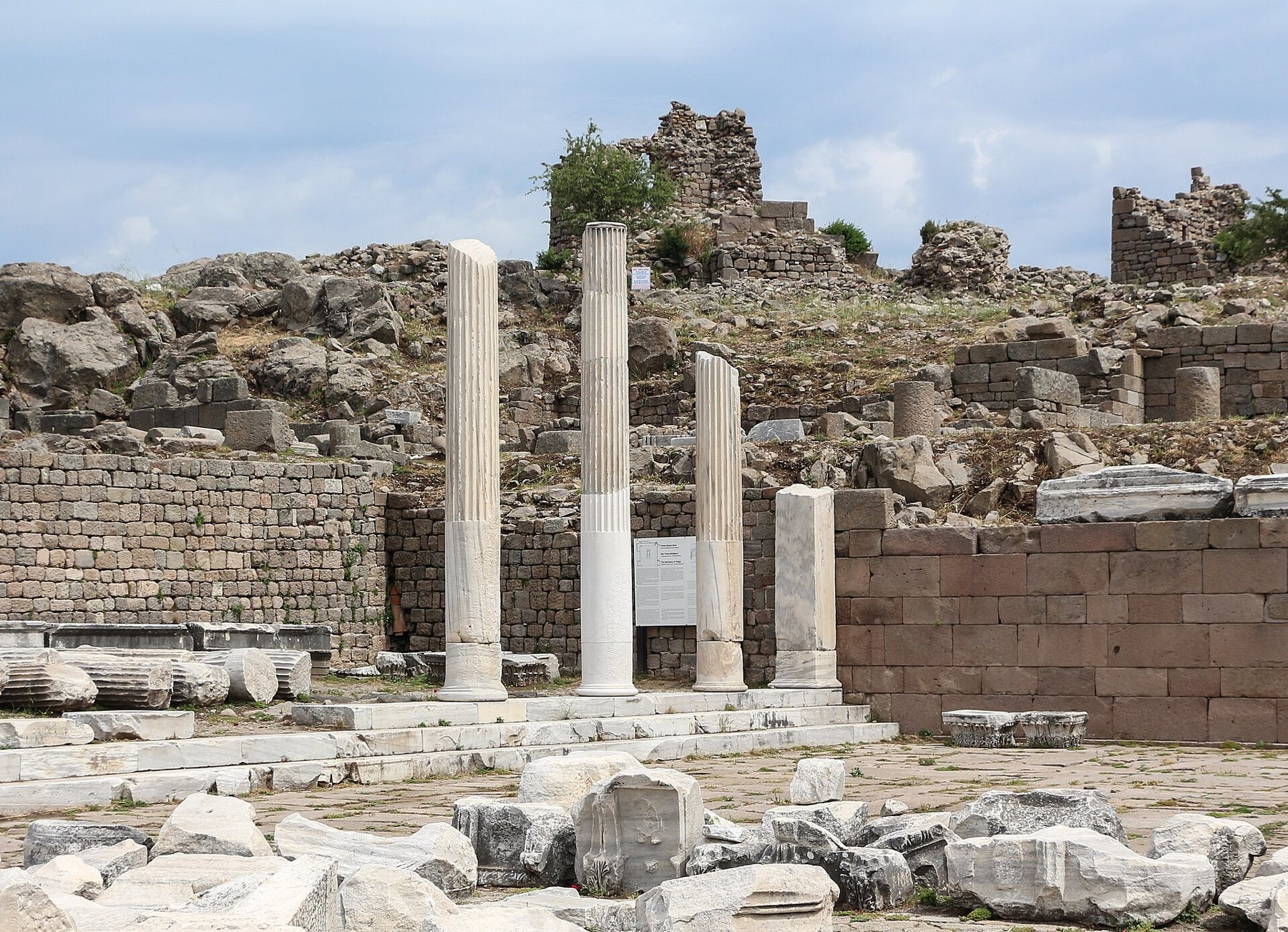
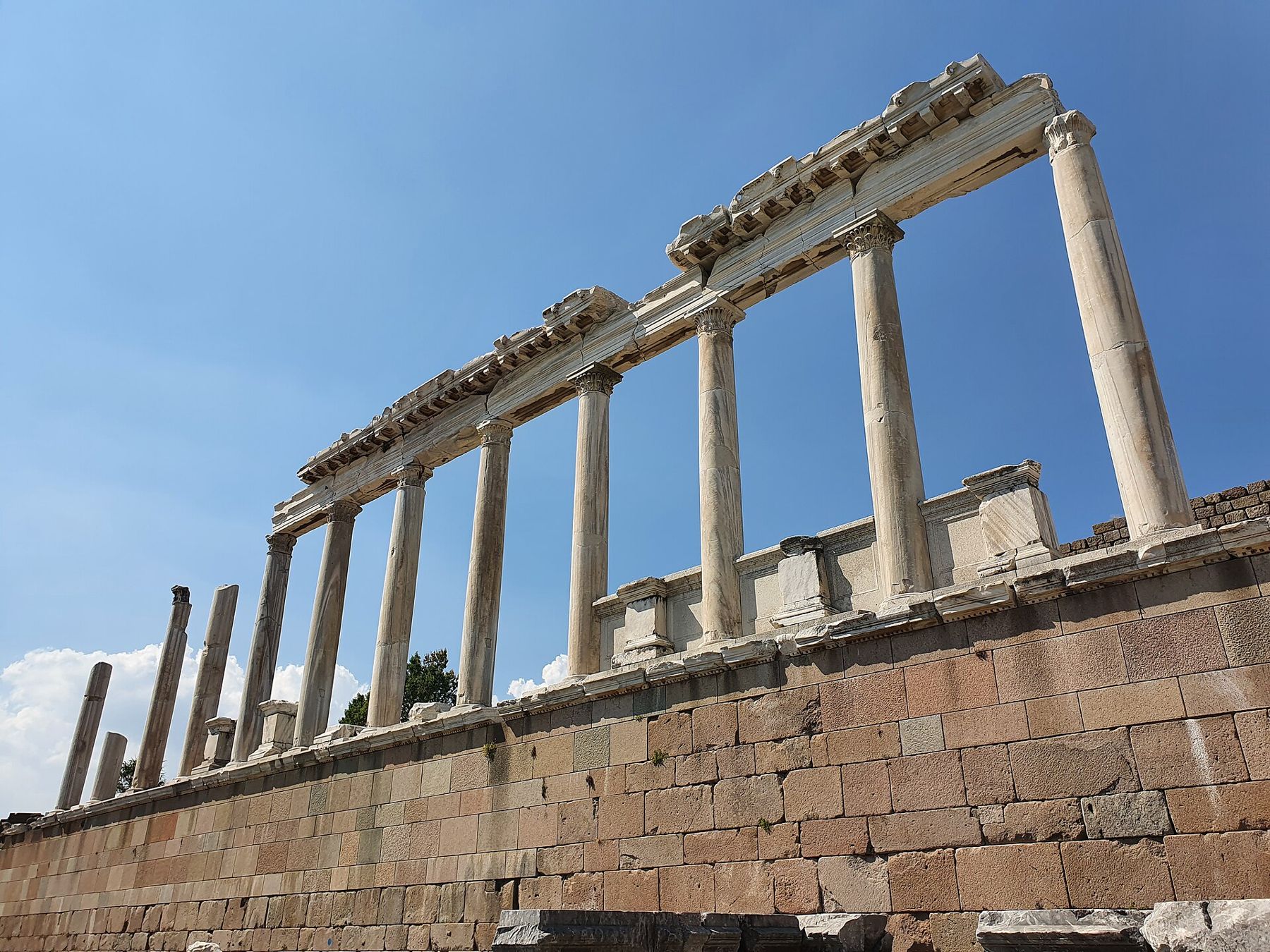
The most conspicuous building on top is the Temple of Trajan, begun under the emperor Trajan and finished under Hadrian. German archaeologists re-erected some of its white marble columns and entablature on a vaulted terrace, and on a bright day they stand out against the sky for miles.
The theatre on the slope
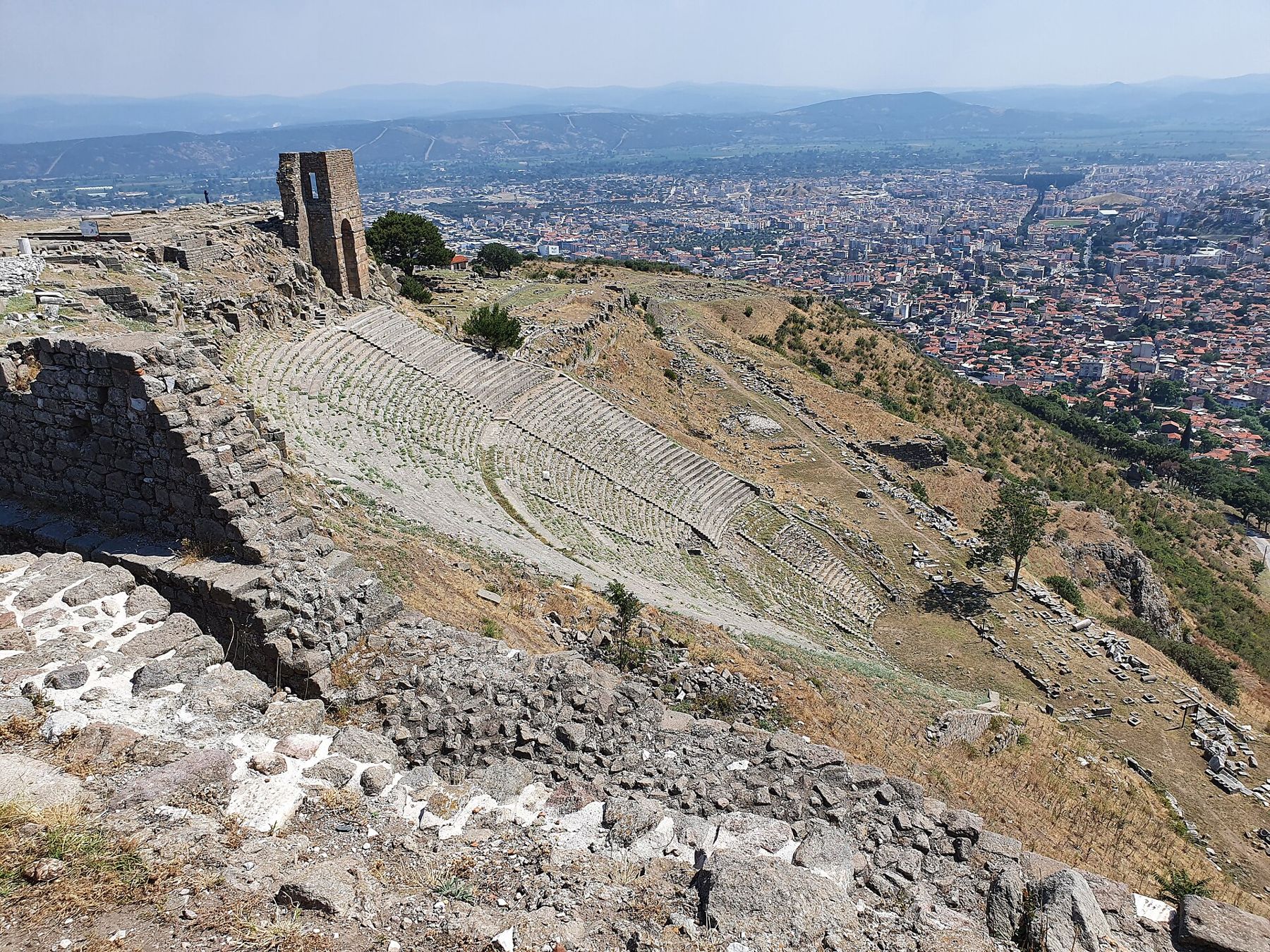
Just below the temples, the theatre is the reason many people come. Its rows of seats run down the hillside in a narrow, very steep fan, among the steepest of any ancient theatre, with room for around ten thousand spectators. At the bottom, a long terrace once carried a wooden stage that was taken down between performances, leaving the space free for the temple of Dionysus at its end.
Sit in one of the top rows and the town and the valley seem to fall away beneath your feet. The steps down are uneven and there are no handrails, so take them slowly, and do not try them in wet weather.
A little further along, a platform of foundations marks the site of the Great Altar, often called the Altar of Zeus. Its famous frieze of gods fighting giants was excavated in the 19th century and rebuilt in Berlin, where it gave its name to the Pergamon Museum. On site you see only the terrace and a couple of trees, but standing there helps you imagine the size of the monument.
Sit in one of the top rows and the town and the valley seem to fall away beneath your feet.
The Attalids made their name partly by defeating the Galatians, Celtic invaders who had settled in central Anatolia. To celebrate, they set up victory monuments with statues of dying and defeated Gauls, known today from Roman marble copies such as the Dying Gaul in Rome. The kings also built a great library and encouraged scholars and sculptors, and their court style, dramatic and full of movement, spread across the Greek world.
2ND C. BCALSO ON THE INDEXHierapolis and the white terraces, barefoot
Walking down through the lower city
Instead of taking the cable car back down, you can walk down the ancient road that zigzags across the southern slope. It passes the terraces of the great gymnasium, laid out on three levels for different age groups, the sanctuary of Demeter and the lower agora, before reaching the edge of the modern town. The path is rough in places and poorly signed, and it is hot in summer, but it shows how much of the city lay below the royal summit, and it is usually empty.
The Asklepieion
On the plain southwest of the town lies the Asklepieion, a sanctuary of the healing god Asclepius that drew the sick from across the Roman world. Treatments mixed baths, diet, exercise and dreams interpreted by the priests. Galen, the most influential physician of antiquity, was born in Pergamon in the 2nd century AD and trained here.
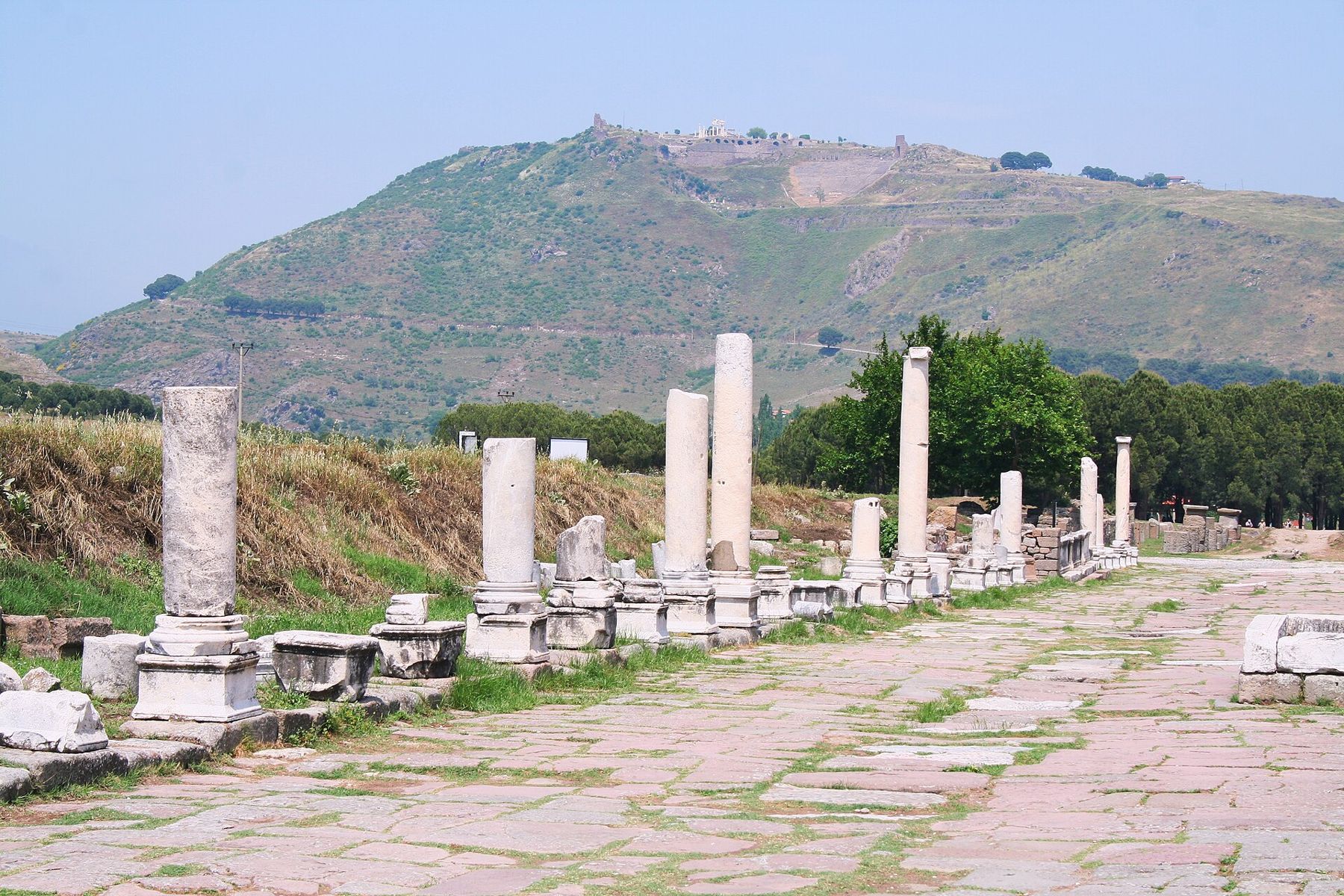
You walk in along a colonnaded sacred way, then reach a courtyard with a small theatre, a sacred spring and a vaulted underground passage that leads to a round treatment building. The cypresses and quiet make it feel very different from the windy acropolis. It sits next to a military area, so follow the signs and do not wander off the marked route.
Allow a good hour and a half at the Asklepieion. Behind the theatre seats, the little tunnel is cool even in summer, and the sound of water in the channels beneath it was part of the cure. The sacred spring still flows, though you should not drink from it. Inscriptions and dedications left by grateful patients were found all over the sanctuary, and some are in the museum in town.
The Red Basilica in town
In the middle of Bergama, the Red Basilica is a vast brick temple built in the 2nd century AD, probably for Egyptian gods such as Isis and Serapis. It was later turned into a church, one of the Seven Churches of Asia named in the Book of Revelation. The red brick walls rise high above the surrounding houses, and the Selinus stream runs under the courtyard through twin tunnels. It is the easiest of the three sites to reach on foot from the town centre, and the old quarter around it is pleasant for a walk.
Three sites, one Bergama day
Buses from Izmir run to Bergama's bus station on the edge of town, and a service minibus or a taxi takes you into the centre. Start with the cable car to the acropolis early, before the heat and the tour groups, then come down for the Red Basilica and lunch in town, and take a taxi to the Asklepieion in the afternoon. The archaeology museum in the centre has finds and models that help tie it together.
Bergama itself is a working market town rather than a resort, with an old quarter of Ottoman houses climbing the lower slope of the acropolis, a covered bazaar and a few small mosques. Staying a night lets you see the acropolis at opening time and the Asklepieion in the soft evening light, and avoids the long return to Izmir in the dark.
Hours and ticket rules differ between the three sites and change with the seasons. Pergamon pairs naturally with Troy on a trip north toward Çanakkale, or with Izmir as a long day out.