THE RUIN INDEX · PRIENE · GÜLLÜBAHÇE
Priene, a town laid out on a grid
A small Hellenistic town set on terraces under a sheer mountain cliff, with pine trees, a perfect little council house and five columns of a temple that Alexander paid for, looking out over the plain that buried its harbour.
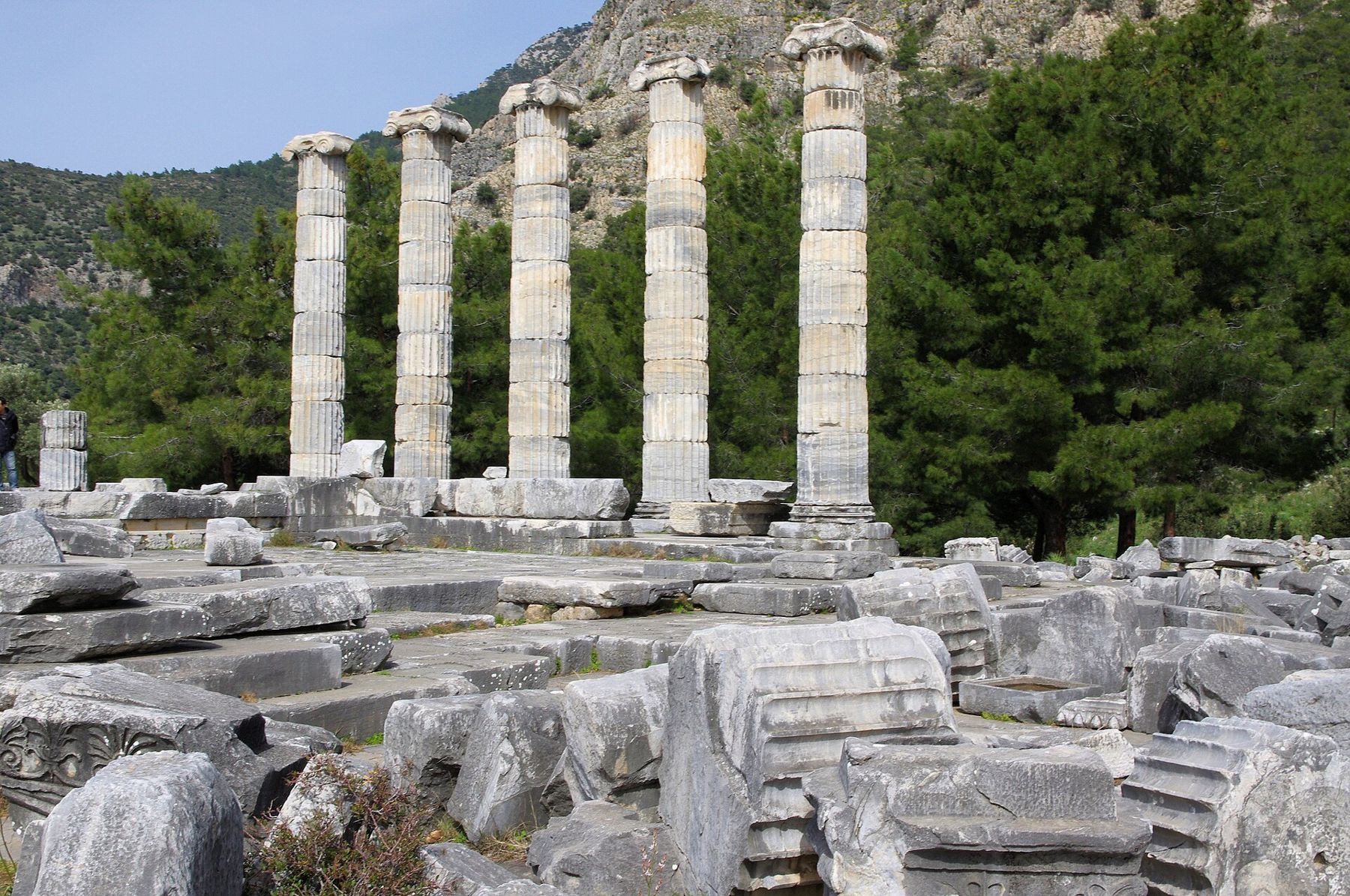
Priene is the most beautiful of the ancient sites on the Aegean side. It lies on a series of terraces cut into the southern slope of Mount Mykale, the mountain the Turks call Samsun Dağı, with a sheer cliff behind it and the flat plain of the Büyük Menderes spread out in front. Pine trees grow between the walls, and on a spring morning the only sounds may be birds and wind. The site sits above the village of Güllübahçe, a short ride from Söke in Aydın province.
A new town on a hillside
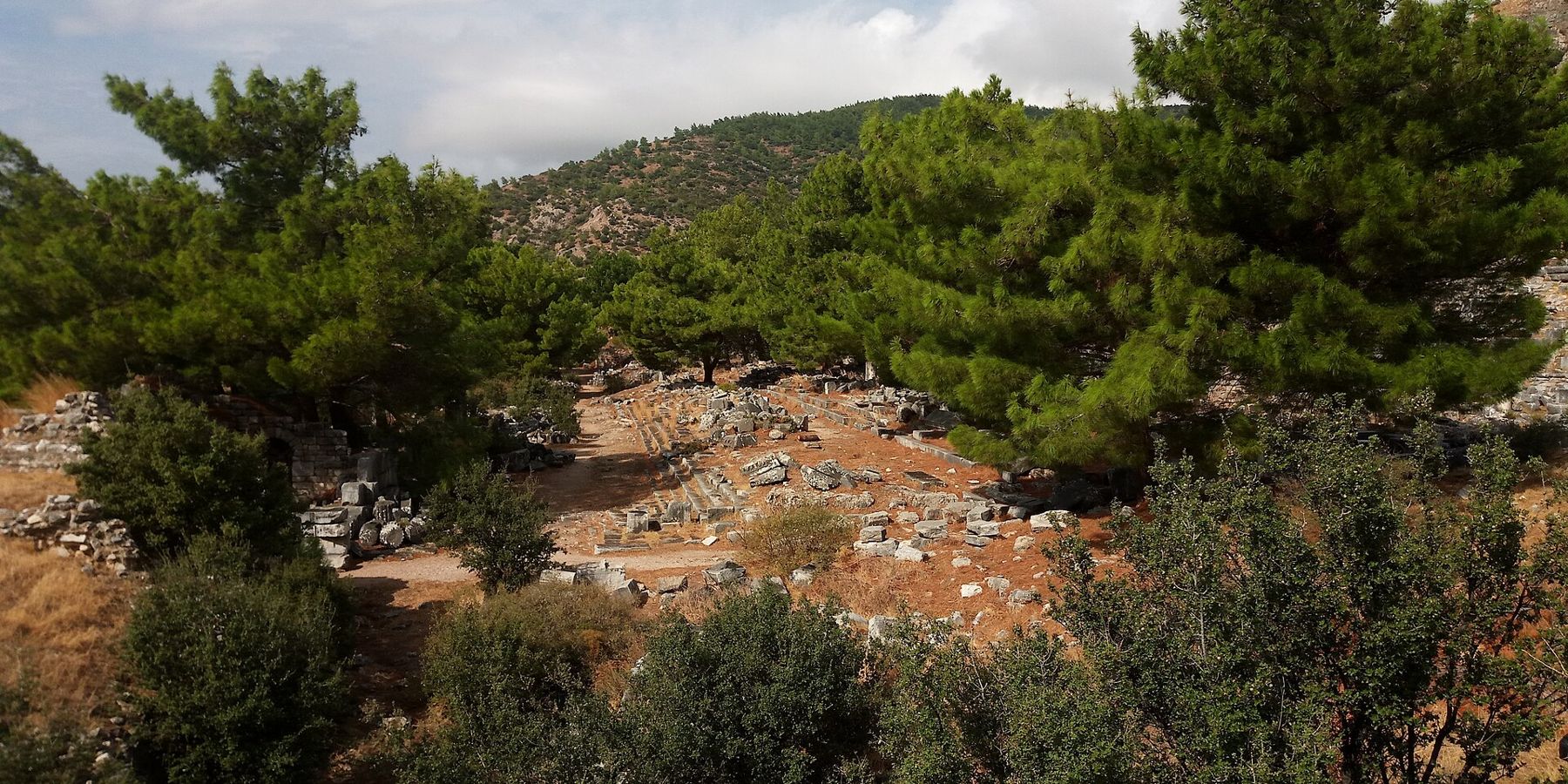
The Priene you see was refounded in the mid-4th century BC, when the older town, whose site is lost, was abandoned, probably because its harbour was silting up. The new town was laid out on a strict grid of streets crossing at right angles, despite the steep slope. Main streets run along the contours from east to west, while the cross streets climb straight up the hill, often as stairways. Within this grid, each block held houses or public buildings, and the plan can still be followed on the ground.
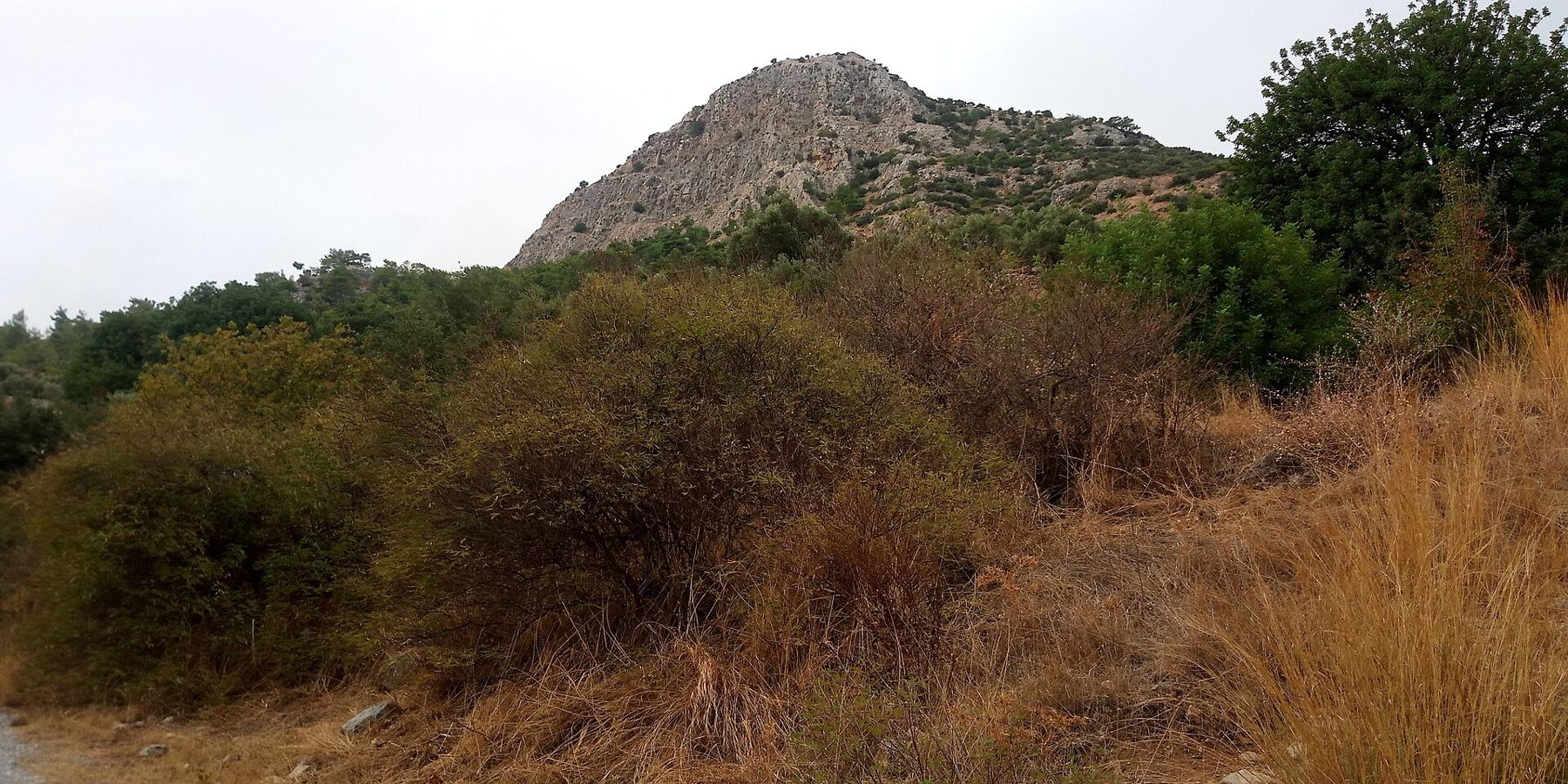
Priene was never large, with perhaps a few thousand inhabitants. That is part of its appeal. It is a whole town at a human scale, and because it was later left largely alone, much of its original layout survives without Roman rebuilding on top.
The town wall, built of well-cut blocks, ran around the whole slope and up onto the cliff above, enclosing far more ground than the houses ever filled. Parts of it, with towers and gates, can still be traced. Water came from springs on the mountain and was distributed by pipes and fountains, some of which survive at street corners, a reminder that a planned town needed planned water too.
The Temple of Athena Polias
The finest building in Priene was the Temple of Athena Polias, the protector of the city. It was designed by Pytheos, the architect of the Mausoleum at Halicarnassus, and was admired in antiquity as a model of the Ionic order. An inscription from the temple, now in the British Museum, records that Alexander the Great paid for its dedication when he passed through in 334 BC.
Five columns have been re-erected on the temple platform, and they are the image of Priene that people remember: pale marble against the cliff and the sky, with the plain below. Walk around the platform to see the fallen drums and capitals and the scale of the building.
Sit on the top row and imagine the town's business being argued out below.
The council house and the theatre
East of the temple, the bouleuterion, or council house, is one of the best-preserved buildings of its kind anywhere. It is almost square, with rows of stone seats rising on three sides around a small floor with an altar in the middle. It held several hundred councillors, and it was once roofed with a wide timber roof. Sit on the top row and imagine the town's business being argued out below. On a quiet day, a voice at floor level carries clearly to the very back.
Higher up, the theatre is small but elegant. Its front row has carved marble chairs, thrones for priests and dignitaries, with lion's-paw feet, and the stage building has been partly preserved. It is a fine place to sit in the shade of the pines and look over the ruins toward the plain.
3RD C. BCALSO ON THE INDEXThe Temple of Apollo at Didyma, never finished
Between the council house and the agora stood the prytaneion, the office of the town's magistrates, where a sacred fire was kept burning. Inscriptions found all over Priene, on walls, statue bases and the temple itself, record decrees, honours and disputes, and they make Priene one of the best-documented small Greek towns. Some of the inscriptions concern the town's long-running quarrels with its neighbours over land, including a dispute with Samos that lasted for generations.
Houses, markets and the lost harbour
Below the main street lie the agora, the market square with its long stoas, and blocks of private houses. Excavators in the late 19th century studied these houses carefully, and Priene became one of the key sites for understanding how ordinary Greek families lived: a courtyard, a main room facing south for the winter sun, storerooms and an upper floor. Further down the slope are the gymnasium and the stadium, where you can still see the starting blocks for runners.
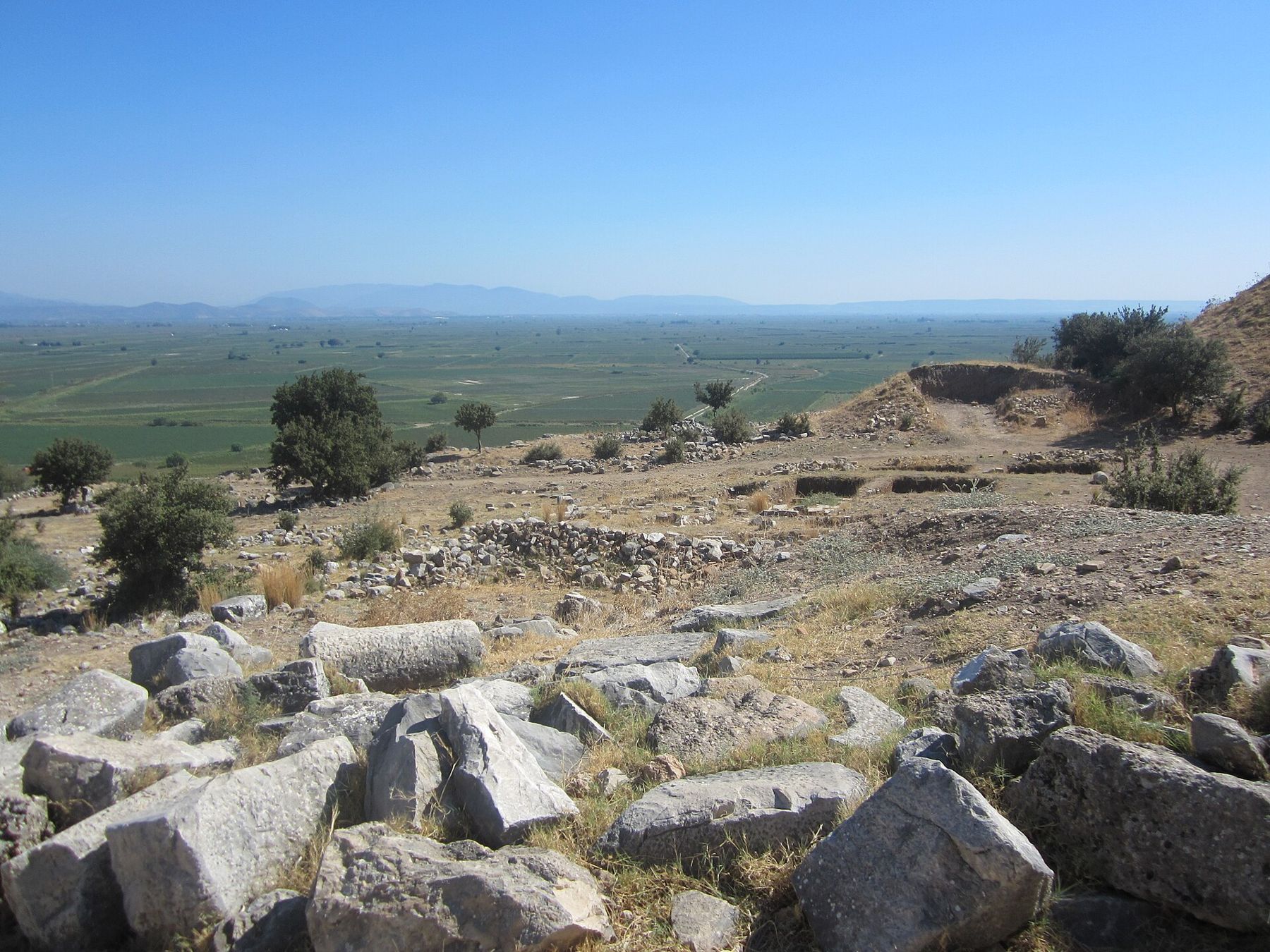
From almost anywhere in Priene, you look out over what was once the sea. The Maeander, the river that gave its name to the word for a winding course, carried so much silt that the bay below filled in, and the town was left stranded, as Miletus was. By the time of the Romans, Priene's harbour was gone, and the town slowly declined.
The climb and the acropolis
From Güllübahçe, a steep road and path climb to the entrance. Inside, expect steps, uneven paving and a lot of up and down. The acropolis on top of the cliff, Teloneia, can be reached by a long and steep path, but it is rough, exposed and not for everyone. The views from the main terraces are fine enough for most visitors.
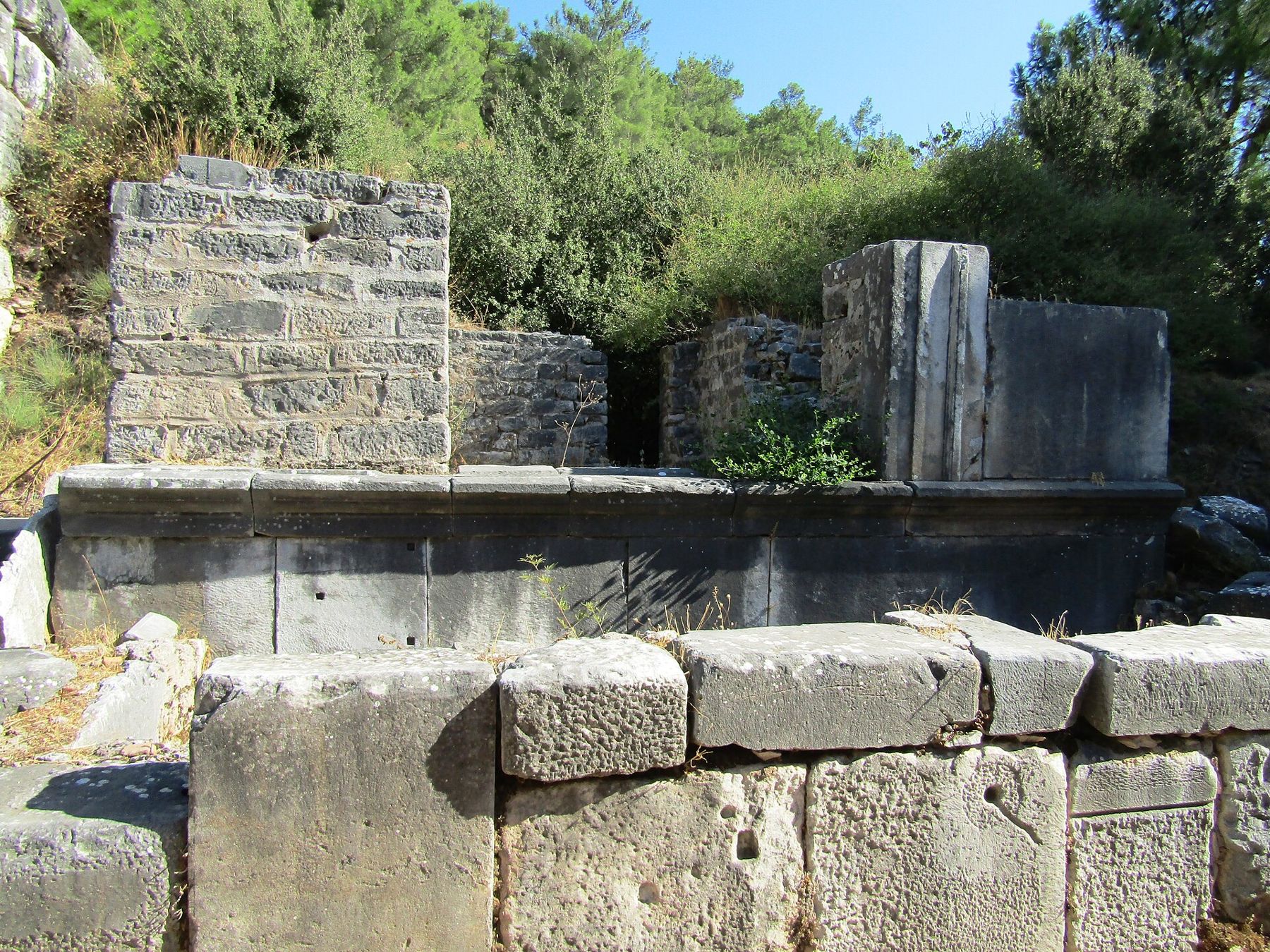
Below the site, Güllübahçe is a small village with a few simple places to eat under the trees and a stream running down from the mountain. It makes a good pause before or after the climb. The village also gives a sense of how people have lived beneath Mykale for centuries, with gardens and orchards on the lower slopes and the great cliff always behind.
Spring is the loveliest time to visit, with flowers among the stones and the plain green below. Summer afternoons are hot even in the pines, so come early. Opening hours change between the summer and winter schedules.
The minibus from Söke and beyond
Minibuses run from Söke, the market town at the centre of this area, to Güllübahçe, roughly every half hour to an hour in season. Söke itself has frequent buses from Kuşadası, Selçuk and Izmir. With a car, Priene combines well with Miletus and Didyma to the south; without one, it pairs easily with a night in Kuşadası or Selçuk. Either way, give it time. Priene rewards a slow, unhurried walk more than any other site in this guide, and it is often half empty while the crowds fill Ephesus.