THE RUIN INDEX · SARDIS · SART
Sardis, where coins were first struck
The capital of the Lydian kings sits beside a busy road east of Izmir. Two sites, a short walk apart, hold a huge unfinished temple and a marble court with an ancient synagogue beside it.
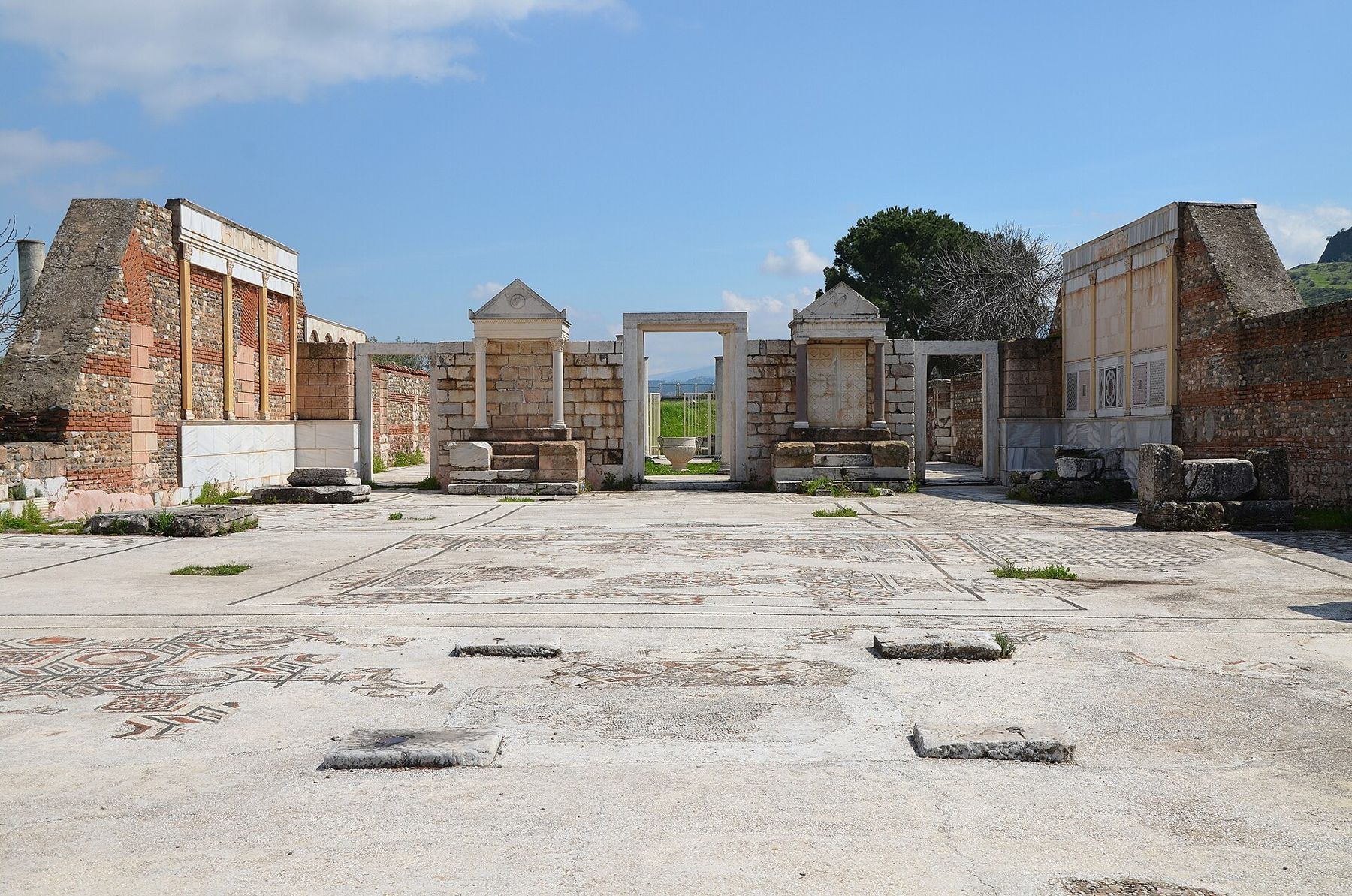
Sardis was the capital of Lydia, the kingdom of Croesus, and for a few centuries one of the richest cities in the world. Ancient writers credited the Lydians with the first coins, small lumps of electrum stamped with a lion's head, and the story of a king so wealthy that his name became a proverb. Today the ruins lie beside the village of Sart, about 90 kilometres east of Izmir in Manisa province, at the foot of a crumbling acropolis.
Croesus, Cyrus and the Royal Road
Lydia rose to power in the 7th century BC and reached its height under Croesus in the mid-6th century. His defeat by the Persian king Cyrus, traditionally dated to around 546 BC, ended the kingdom, and Sardis became the seat of a Persian governor and the western end of the Royal Road that ran all the way to Susa. The burning of Sardis during the Ionian Revolt in 499 BC helped set off the Persian Wars. Later the city passed to Alexander, the Seleucids, Pergamon and Rome, and it stayed important into Byzantine times. Each of those layers left something, and the excavations, run by American universities since 1958, have uncovered houses, workshops and a stretch of the massive Lydian city wall as well as the famous monuments.
Two sites, one valley
The ruins are in two parts. By the main road stands the Roman bath-gymnasium complex with the synagogue. About a kilometre south, up the small valley of the Pactolus stream, lies the Temple of Artemis. Walking between them takes fifteen to twenty minutes along a quiet lane, past orchards and the stream that ancient writers said ran with gold.
That legend has a basis. The Pactolus once carried flakes of electrum, a natural mix of gold and silver, washed down from the hills, and excavators found the remains of workshops where it was refined. Whether Midas really bathed in the stream to wash off his golden touch is a matter for myth.
The bath-gymnasium and the Marble Court
The largest standing structure in Sardis is the bath-gymnasium, built after an earthquake devastated the city in AD 17 and the Romans helped it rebuild. Its showpiece is the Marble Court, a two-storey screen of columns and carved entablatures re-erected by archaeologists in the 1960s and 1970s. Some find a reconstruction like this too tidy; standing in its shade, it gives a real sense of the height and richness of a Roman public building in Asia Minor.
A synagogue in the gymnasium
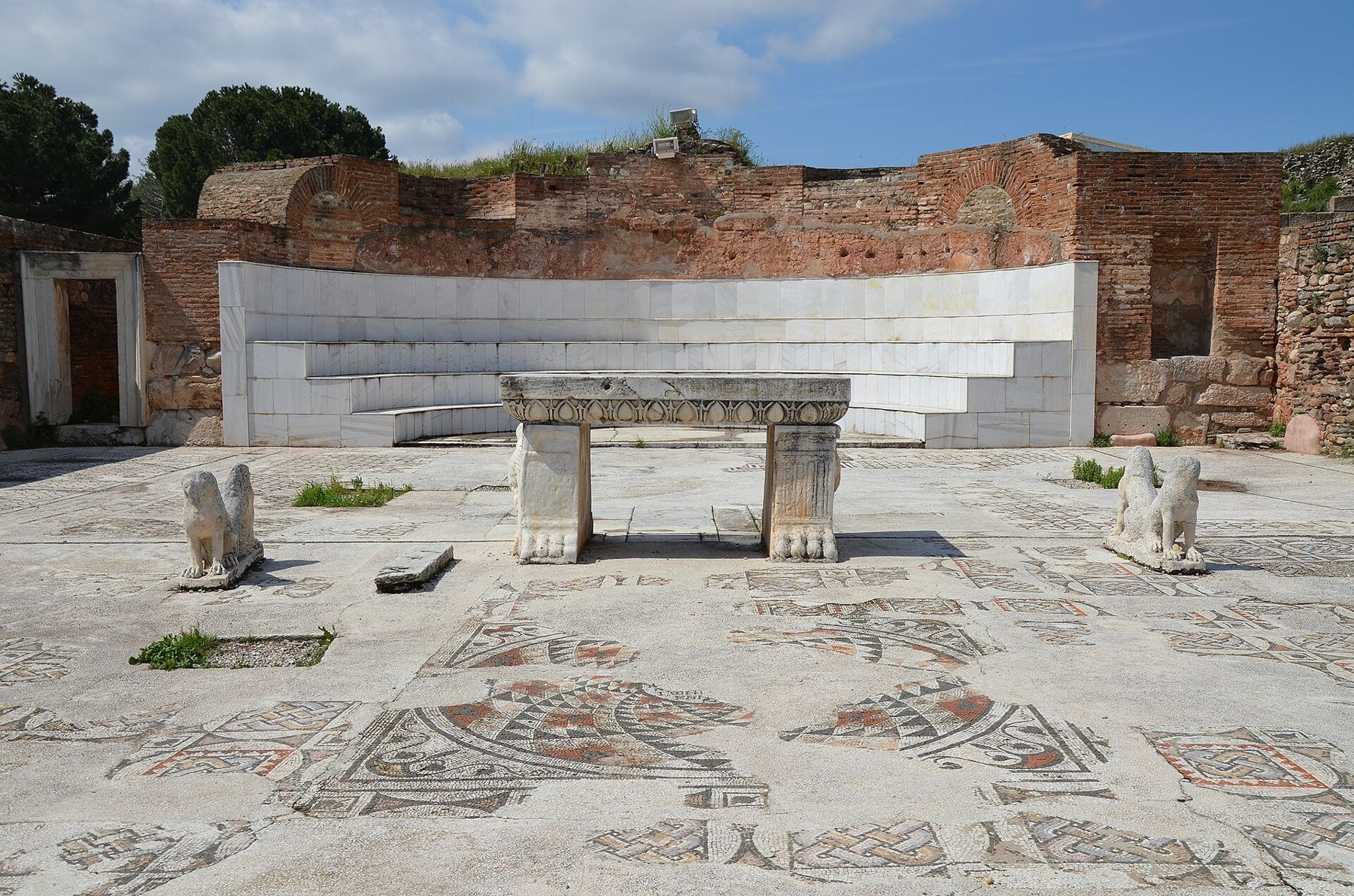
In the late Roman period, part of the gymnasium complex was turned into a synagogue, a long hall that is one of the largest ancient synagogues known outside the Holy Land. Its floor is laid with mosaic panels, and many carry donors' inscriptions in Greek. At the far end stands a heavy marble table flanked by pairs of stone lions reused from an earlier monument. It is a rare chance to see how a Jewish community sat at the centre of a Roman city rather than on its edge.
2ND C. ADALSO ON THE INDEXMiletus, a harbour city stranded in fields
Behind the synagogue runs a line of Byzantine shops along the old main road, with numbered fronts and a few marked with crosses or menorahs scratched into the stone. They are easy to miss and worth a slow look.
The Temple of Artemis
The temple at the head of the valley was begun around 300 BC, after Alexander's conquest, and was one of the largest Ionic temples of the ancient world. Work went on into Roman times and never quite finished. Two columns still stand to their full height, with capitals intact, and the bases and fallen drums of the others lie in rows. Some columns were never fluted, which shows how long the job dragged on.
Behind the temple, the acropolis rises in eroded ridges of crumbly conglomerate. The paths up are unofficial and the ground is unstable; the view from the temple floor is enough for most visitors. Next to the temple sits a small brick church of the late Roman period, a reminder that the site stayed in use long after Artemis lost her worshippers.
Reaching Sart from Izmir
The easiest way is the regional train from Izmir's Basmane station on the line east toward Alaşehir and Uşak. Sart has its own small station a short walk from the gymnasium. Trains are not frequent, so look at the timetable for the return before you set off. Intercity buses heading to Salihli or Uşak also run along the main road and can drop you at Sart if you ask. With a car, Sardis pairs well with Birgi, about an hour away to the south, for a full day out of Izmir.
When to come and what to expect
There is little shade at either site, and the inland plain is hotter than the coast in summer, so spring and autumn are kindest. Expect few visitors; you may have the temple to yourself on a weekday morning. Facilities are basic, with a ticket hut at each site.
Finds from Sardis, including Lydian pottery, sculpture and coins, are shown in the archaeology museum in Manisa, the provincial capital, which makes a worthwhile stop if you are travelling by car between Sardis and Izmir. The coin cases help explain why a few small electrum lumps from this valley mattered so much: they were the start of a habit that spread from Lydia to the Greek cities and, eventually, everywhere.
For more Ionic columns on a grand scale, the temple at Didyma is the other great unfinished project of the same era, further south on the coast.