The ruin index
Ancient sites of the Aegean side, ordered by the century of what stands there today.
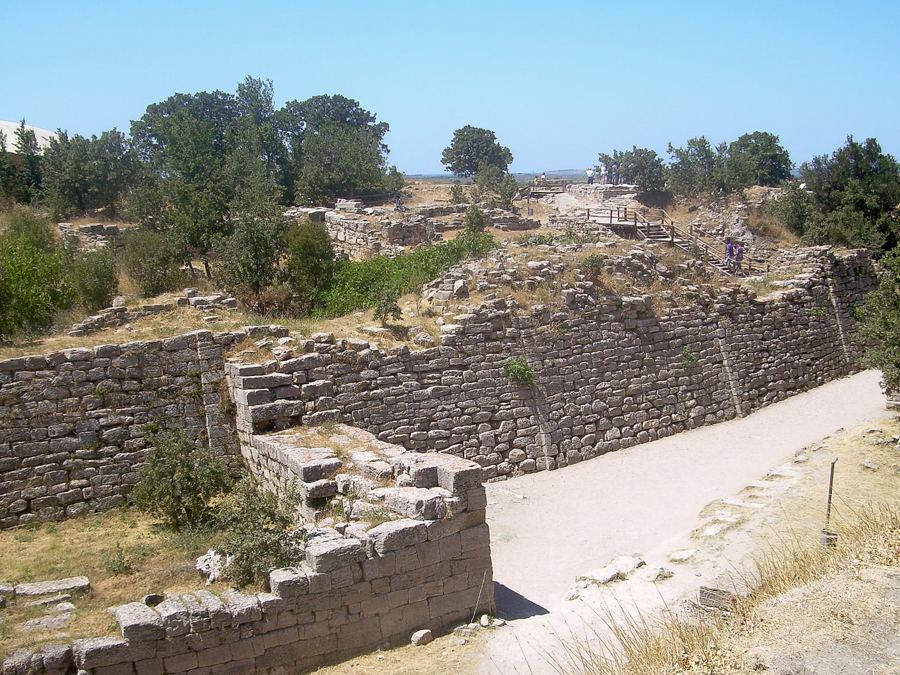
Troy, nine cities deep
A low mound above the plain of the Dardanelles holds nine cities stacked on top of each other. What you walk past is mostly Bronze Age stone, and none of it needs Homer to impress.
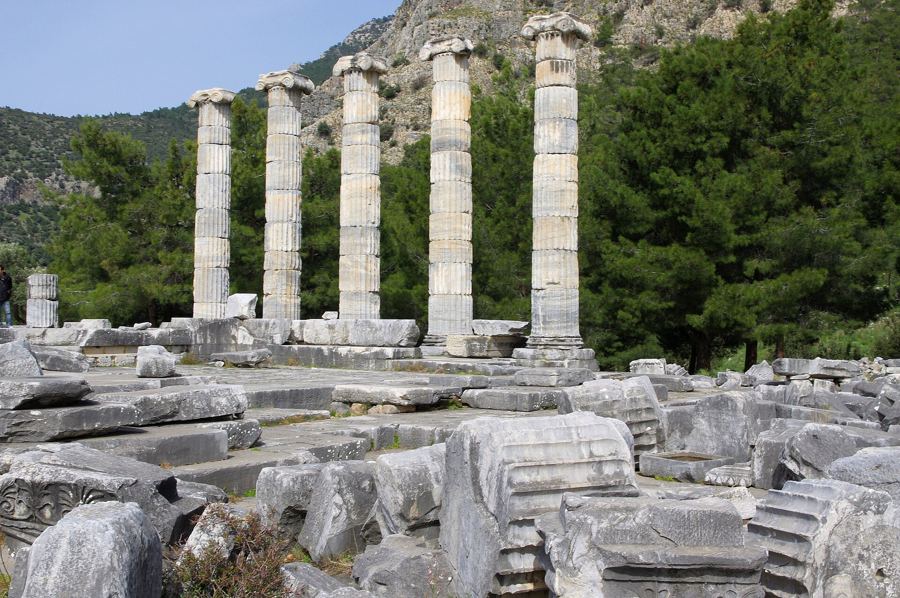
Priene, a town laid out on a grid
A small Hellenistic town set on terraces under a sheer mountain cliff, with pine trees, a perfect little council house and five columns of a temple that Alexander paid for, looking out over the plain that buried its harbour.
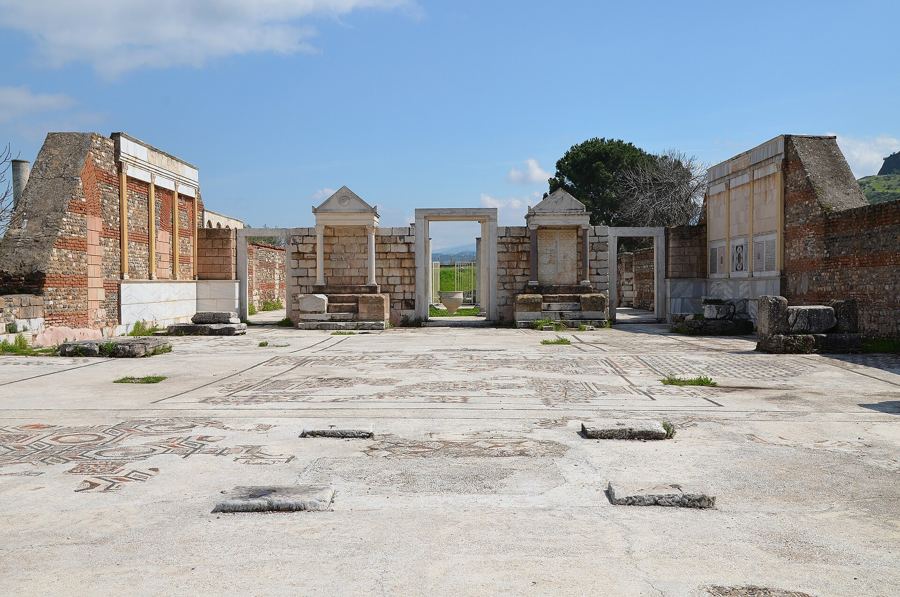
Sardis, where coins were first struck
The capital of the Lydian kings sits beside a busy road east of Izmir. Two sites, a short walk apart, hold a huge unfinished temple and a marble court with an ancient synagogue beside it.
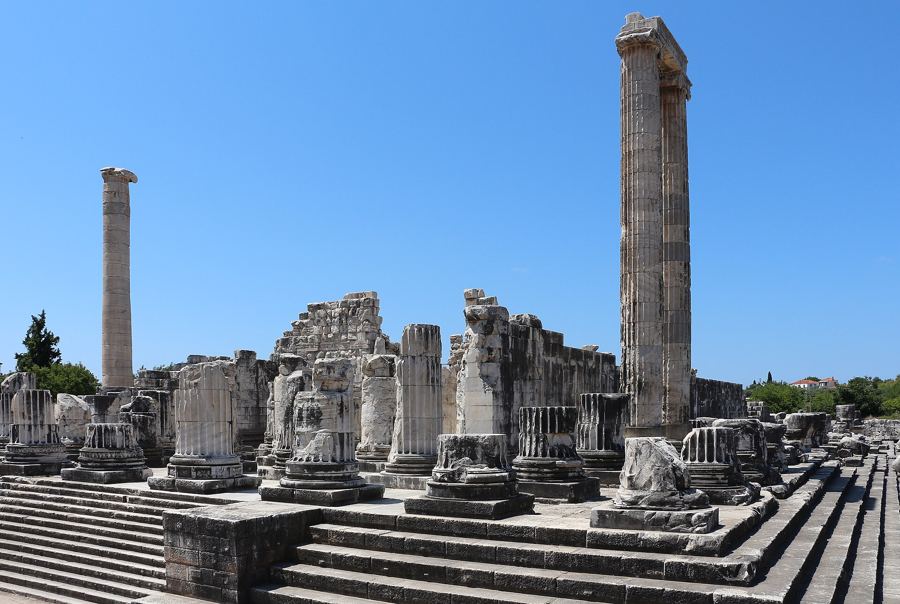
The Temple of Apollo at Didyma, never finished
One of the largest temples of the Greek world was begun around 300 BC and was still unfinished centuries later. Its smooth columns and the builders' drawings on its walls make it unlike any other ruin here.
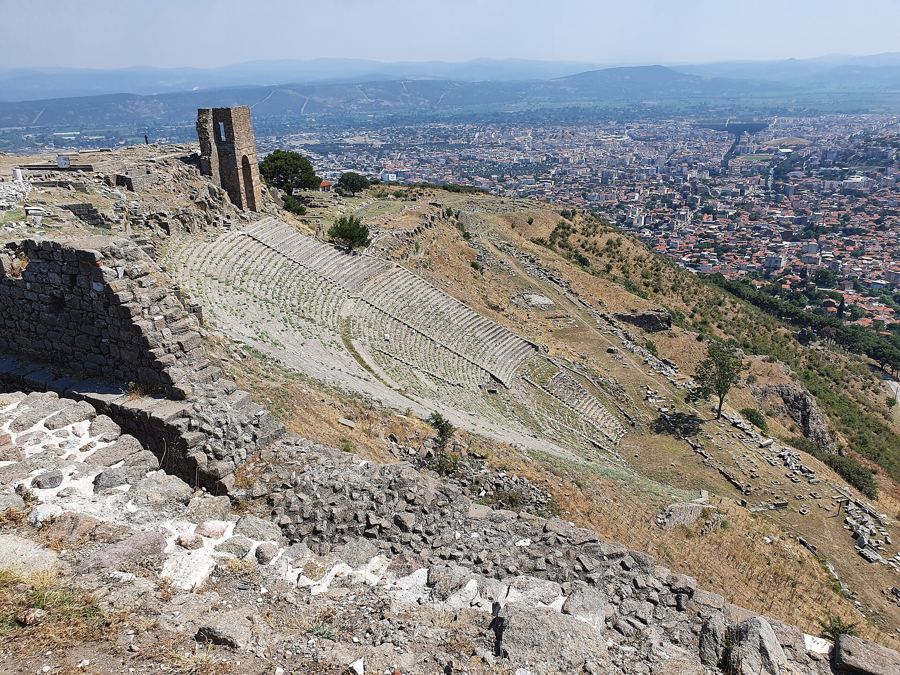
Pergamon's acropolis and its steep theatre
A royal city on a ridge above Bergama, with a theatre that seems to pour down the hillside, a rebuilt Roman temple, a healing sanctuary on the plain and a vast brick temple in the middle of town.
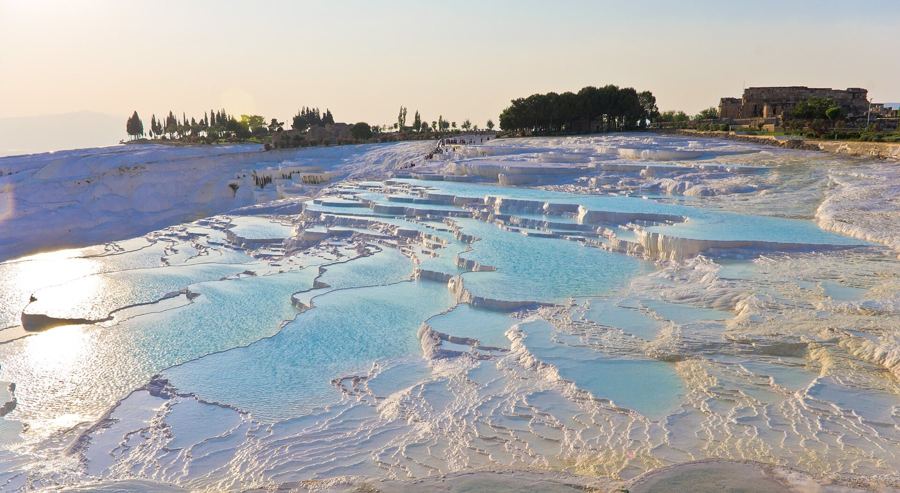
Hierapolis and the white terraces, barefoot
Hot springs built a white cliff of travertine above the Lycus valley, and a Roman spa city grew on top. Walk the terraces barefoot, then explore the theatre and a vast necropolis.
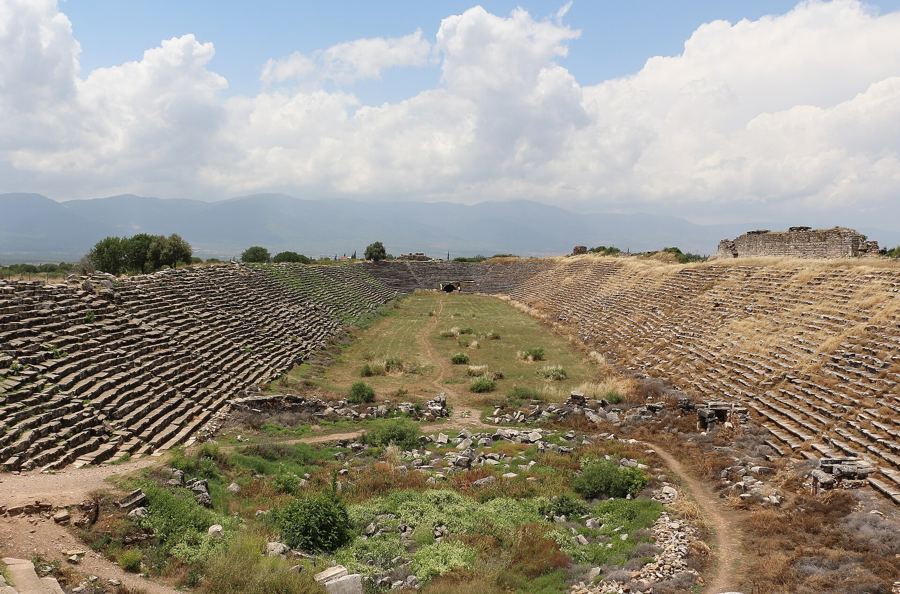
Aphrodisias, the city of sculptors
A marble city in a green upland valley, famous in Roman times for its sculptors. It has one of the best-preserved stadiums of the ancient world and a museum full of faces carved from local stone.
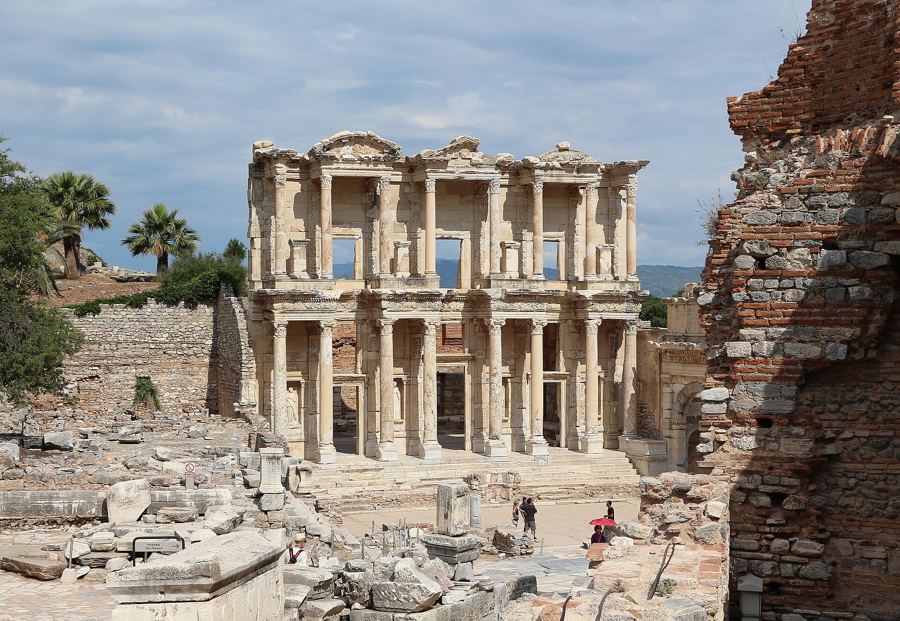
Ephesus from the top gate down
Start at the upper gate and the whole city runs downhill: a marble street lined with fountains and temples, the covered Terrace Houses, the Library of Celsus and a theatre for twenty-four thousand.
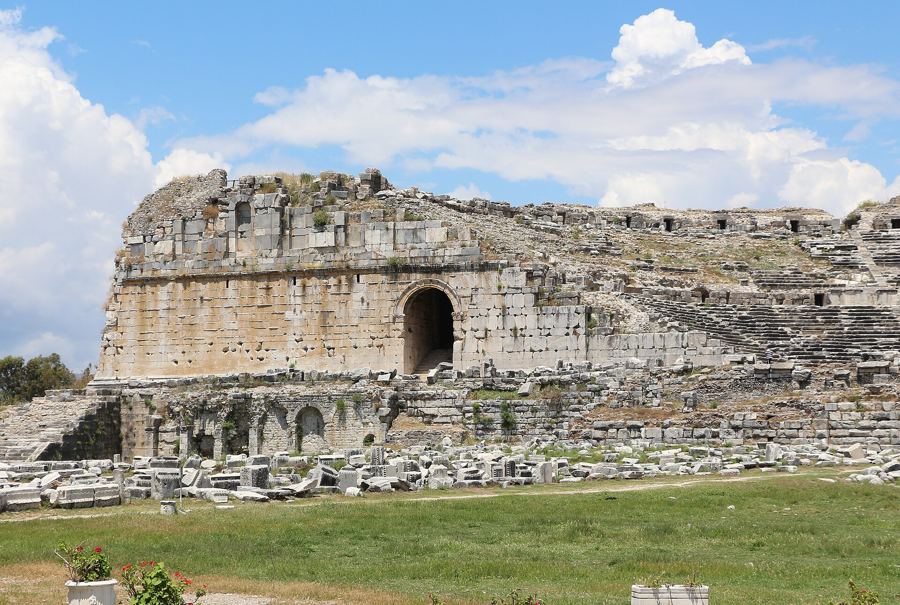
Miletus, a harbour city stranded in fields
Once a great port with four harbours, Miletus now sits miles from the sea among cotton fields. Its theatre still rises like a cliff, and spring floods turn the lower town into a marsh full of frogs.
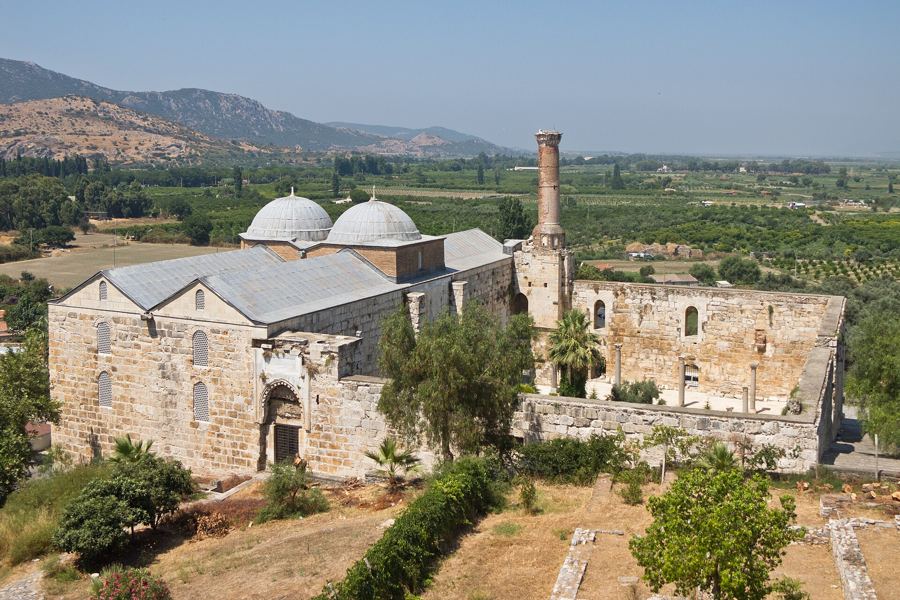
Selçuk and the hill of Ayasuluk
The small town next to Ephesus has its own layers: a vast 6th-century basilica over the tomb of St John, a castle, one of the finest early Turkish mosques and the single column left of a Wonder of the World.