THE RUIN INDEX · PAMUKKALE · DENIZLI
Hierapolis and the white terraces, barefoot
Hot springs built a white cliff of travertine above the Lycus valley, and a Roman spa city grew on top. Walk the terraces barefoot, then explore the theatre and a vast necropolis.
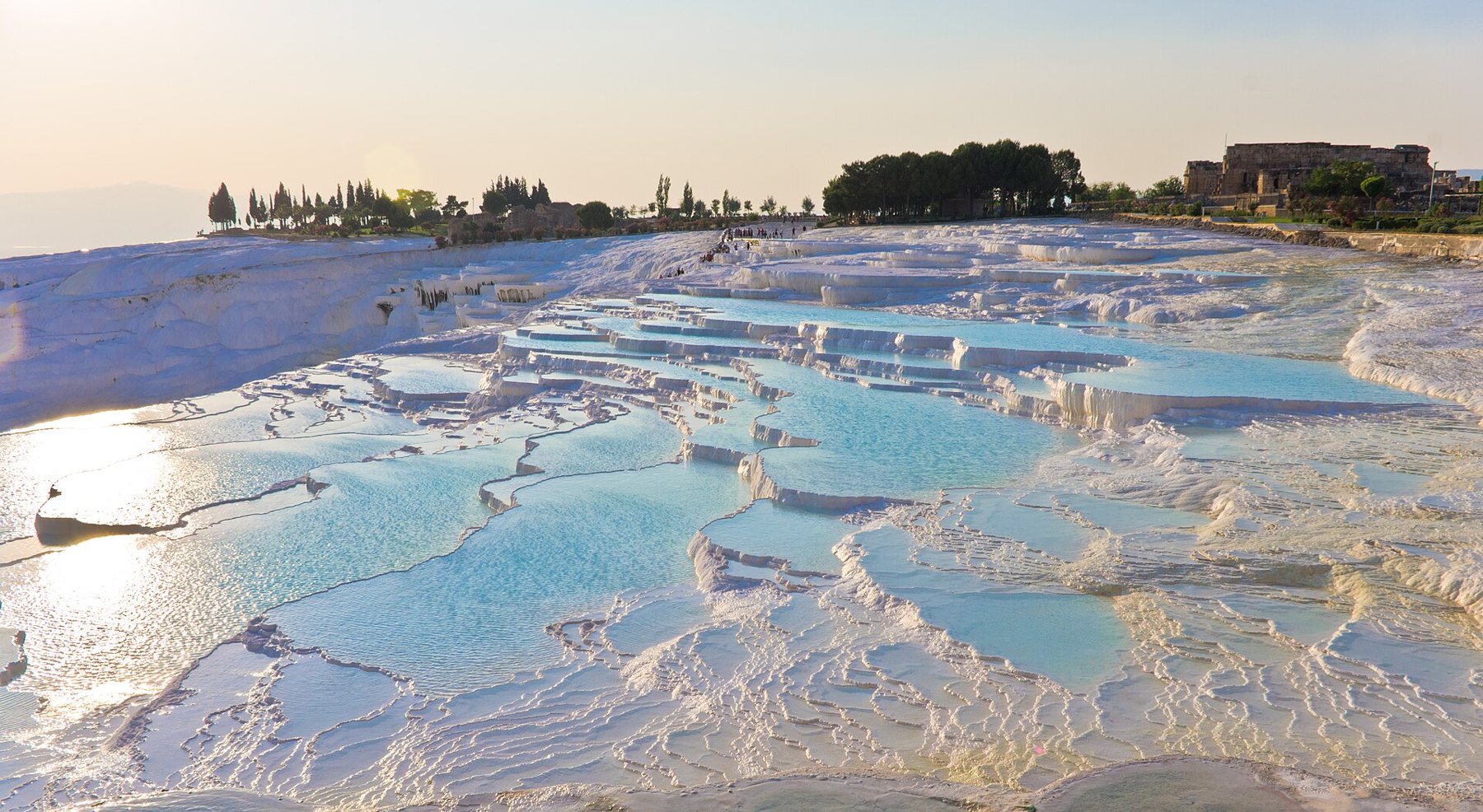
Pamukkale, the cotton castle, is the white cliff of travertine that spills down the hillside above the village of the same name in Denizli province. Hot, mineral-rich springs rise on the plateau, and as the water cools and loses carbon dioxide, it leaves calcium carbonate behind, building terraces and pools layer by layer. On top of the cliff stands Hierapolis, a spa city founded by the kings of Pergamon in the 2nd century BC and rebuilt in grand style under the Romans. Together they have been a World Heritage Site since 1988.
Shoes off on the travertine
To protect the deposits, visitors walk the terraces barefoot, on a designated path from the town gate at the bottom up to the plateau. The surface is mostly firm and slightly rough, with warm water running over it in places and cooler, slippery patches in others. Go slowly, especially on the way down. A small bag for your shoes makes the climb easier.
The terraces are at their most beautiful at the ends of the day. Early in the morning the water steams and the surface is cool underfoot; near sunset the white turns pink and gold.
Many of the pools you see along the path today are kept full by channelled water, and some sections rest dry to recover. In the 20th century, hotels were built on the terraces and drained the springs; they were removed after the UNESCO listing, and the white has slowly returned. Keep to the path and do not climb over the edges of the pools.
The terraces are at their most beautiful at the ends of the day.
The city on the plateau
Hierapolis was a holy city and a health resort, and it prospered under Rome despite earthquakes. A severe one in the 1st century AD destroyed much of it, and the city was rebuilt with long colonnaded streets, baths, temples and gates. The Frontinus Gate, with its three arches flanked by round towers, marks the northern entrance to the main street, and walking down that street gives a good sense of the city's size.
Near the Temple of Apollo is the Plutonium, a cave that ancient writers said gave off deadly fumes. Archaeologists rediscovered it in 2013, and the gases, mostly carbon dioxide, still seep out. It is fenced off for good reason.
The theatre
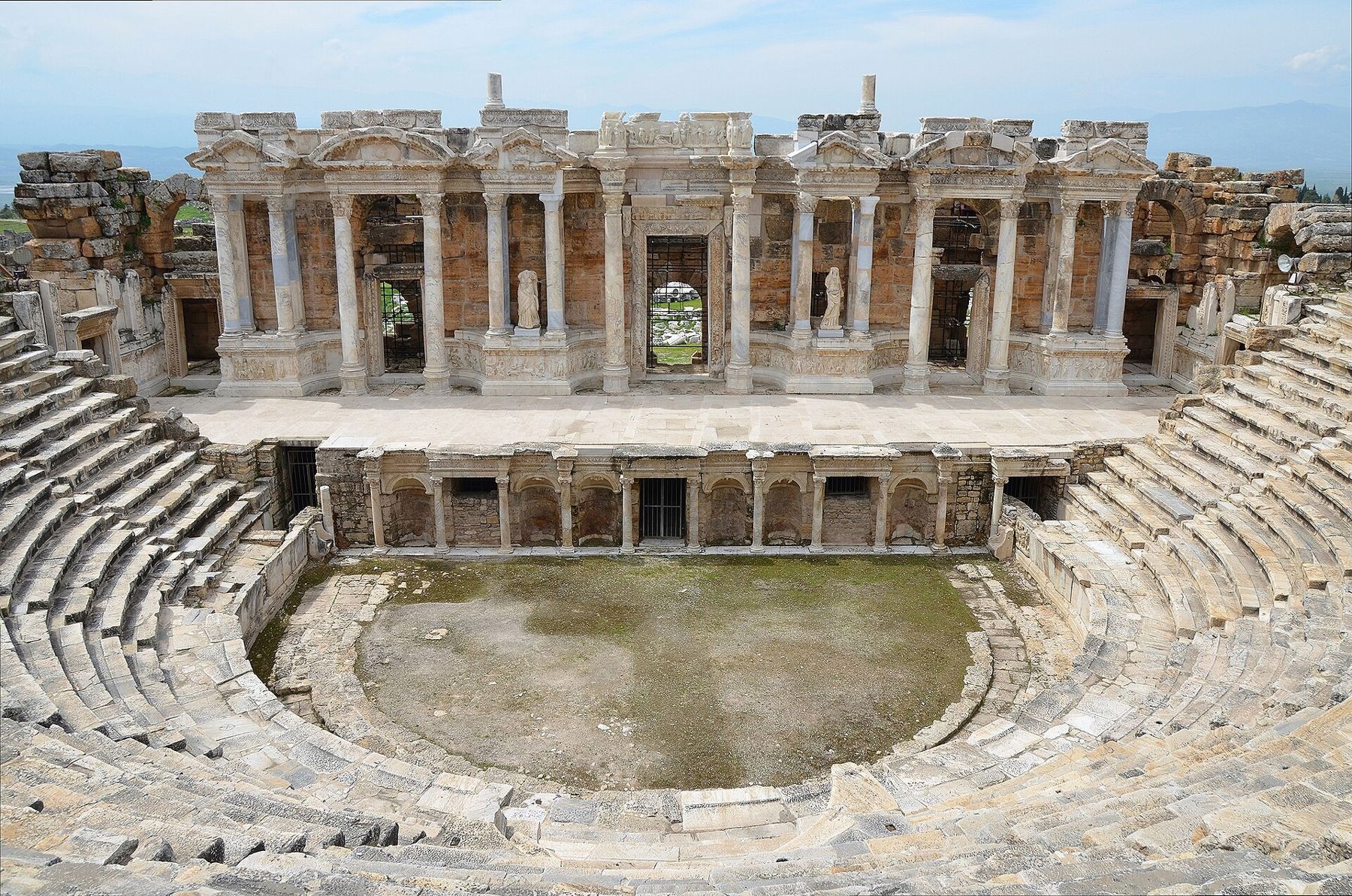
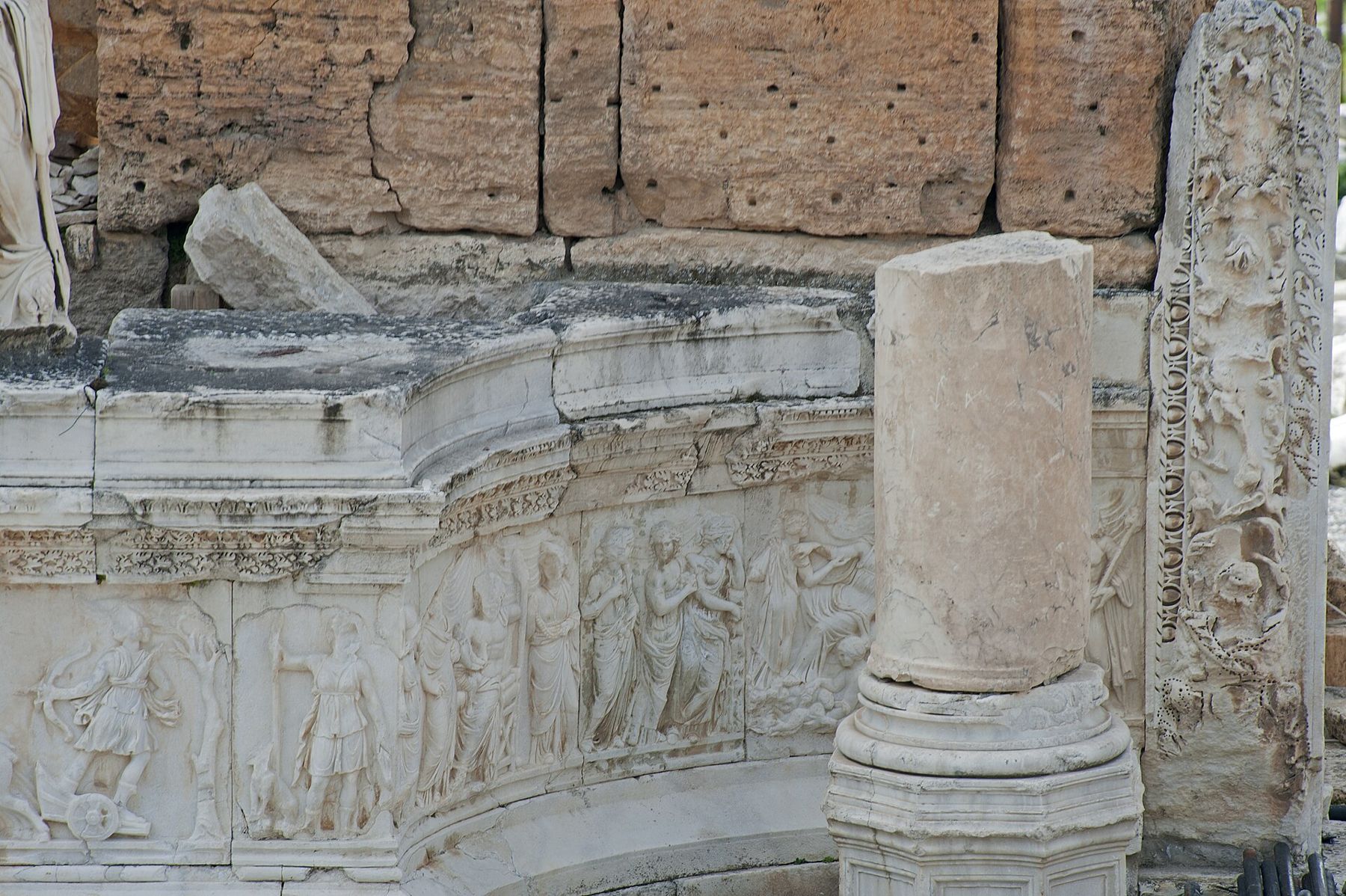
The theatre, set into the hillside east of the main street, was rebuilt in the 2nd century AD and is one of the best preserved in the region. Its stage building has been partly restored, and many of the carved reliefs that decorated it are back in place, with scenes from myth and processions. The climb up to it from the city is steep and exposed, so do it early or late in the day.
ALSO ON THE INDEXAphrodisias, the city of sculptors
The necropolis
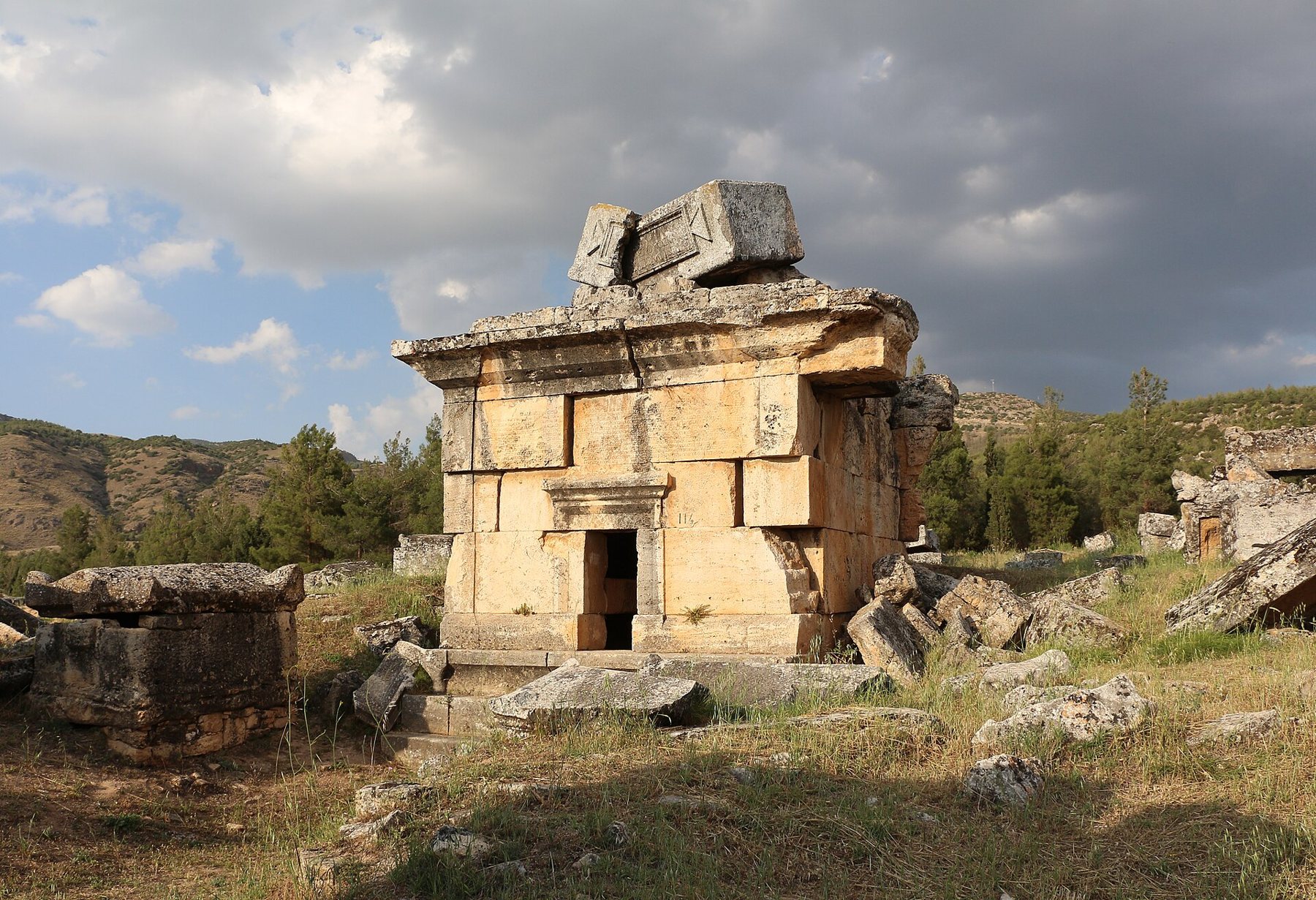
The road north out of Hierapolis is lined with tombs for well over a kilometre. Sarcophagi, house-shaped tombs, round tumuli and family monuments stand among the grass and wild flowers, some still marked with names and inscriptions. Many people came to the city in hope of a cure and never left, and the necropolis is among the largest that survive from the ancient world. Walk it in the afternoon light, when the stones turn gold.
The antique pool and the museum
Further along, a Byzantine wall and gate show how the city shrank in later centuries, and a large basilica near the northern end was one of several churches that made Hierapolis a Christian centre. A sarcophagus from the necropolis carries a carved relief of a water-powered stone saw, one of the earliest known images of a machine driven by a crank and connecting rod, a small reminder that the city was a place of engineers as well as invalids.
The antique pool is a thermal spring with broken columns and fallen marble lying in the warm water, the remains of a portico toppled by an earthquake. Swimming there is popular and has its own ticket. The water is pleasantly warm and the columns can be slippery. Across the path, the museum occupies part of the Roman baths and holds statues and reliefs from Hierapolis and nearby sites.
Between the theatre and the necropolis, the long main street runs north with the remains of a Byzantine gate, latrines and a large basilica beside it. Signs explain the main buildings, and the distances are bigger than they look from the terraces. Plan on walking several kilometres in total, and use the electric carts that have sometimes run along the main street if you are short of time or energy.
On the hill above the city stands the Martyrium of St Philip, an octagonal building linked with the apostle's death. The walk up is worth it for the view down over the whole city and the valley.
Timing a day at Pamukkale
Dolmuş minibuses leave Denizli's bus station for Pamukkale village frequently, and Denizli is reached by bus and by train from Izmir. If you are coming from the coast, the trip is long enough that staying a night in the village makes the visit far more relaxed. Arrive at the bottom gate early, walk up the travertine while it is cool, spend the middle of the day among the ruins and come back down the terraces at sunset, when the white glows pink.
Summer days are hot and the white surface throws the sun straight back at you, so sunglasses and water are essential. Weekends and holidays bring crowds from all over Turkey.
Laodicea and the red springs
Laodicea, across the valley near Denizli, was a wealthy Roman city known for its black wool and its banks, and one of the Seven Churches of Asia named in the Book of Revelation, which famously called its Christians lukewarm. Excavations since the early 2000s have uncovered long colonnaded streets, two theatres, temples and churches, and a good deal has been re-erected. It sees a fraction of Pamukkale's visitors and makes a peaceful half-day.
A few kilometres north of Pamukkale, the village of Karahayıt has hot springs of its own whose deposits are stained red and orange by iron. The water there is hotter, and the colours make a striking contrast with the white of the main cliff.
For the road back west toward the coast, the marble city of Aphrodisias sits in the hills on the way, and the bus guide explains how the Denizli routes connect with Izmir.